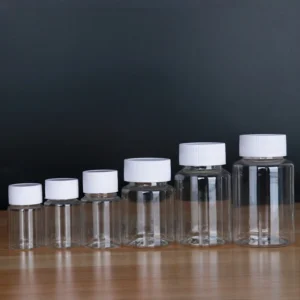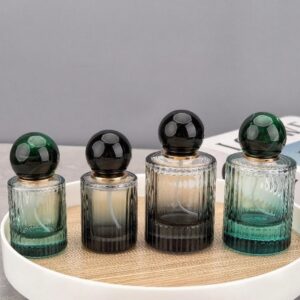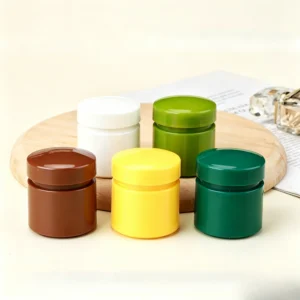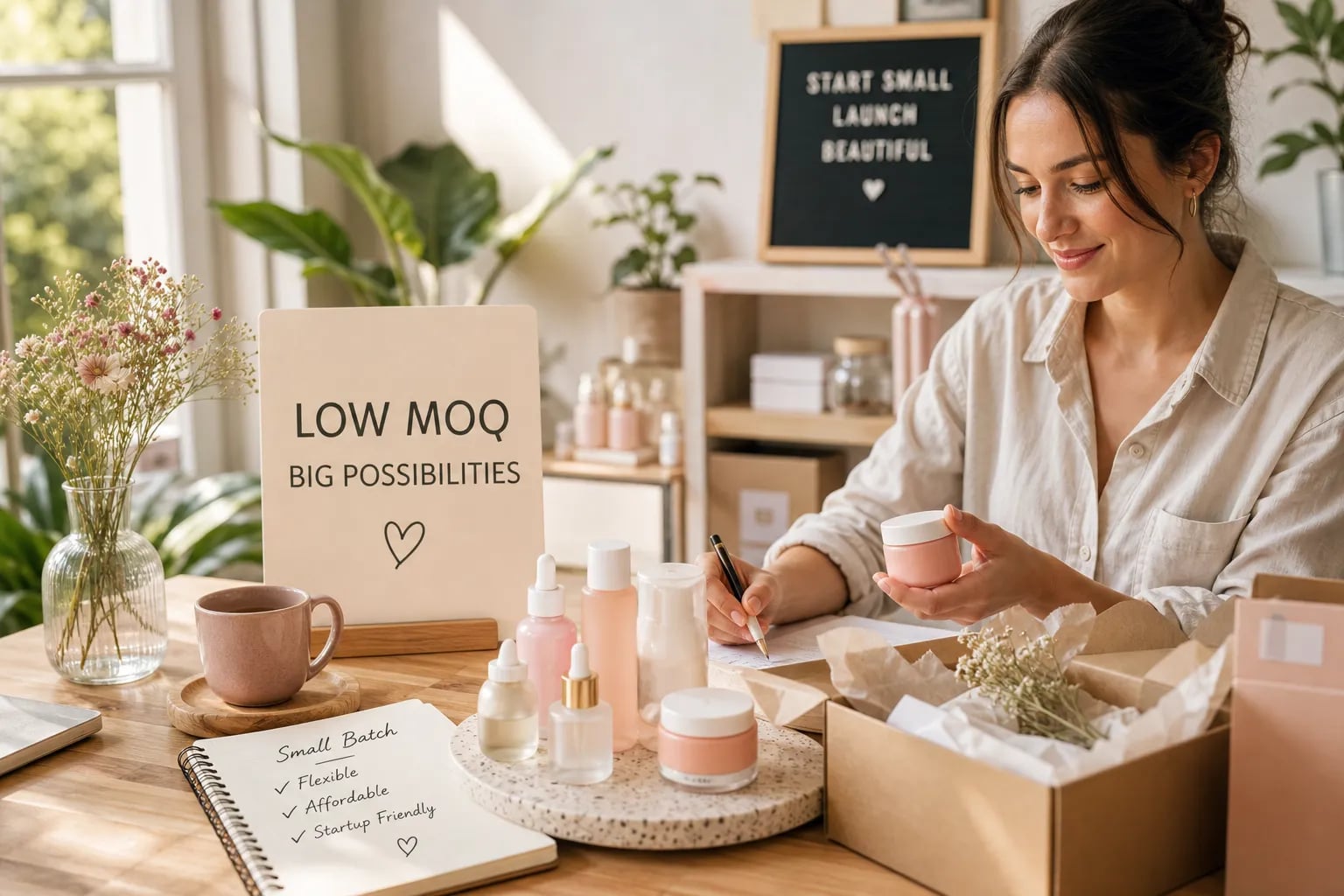
You’ve spent months getting the formula right. You know which bottle shape fits the brand. Then a supplier quotes you a 5,000-unit minimum and the whole plan stalls. Low MOQ cosmetic packaging exists specifically to solve this problem. What started as a workaround for indie founders has grown into a mature, professional sourcing lane, one that wholesale suppliers have built structured programs around because most small-batch brands need 100 to 500 units, not 5,000. Suppliers like BOBOPKG have developed large catalogs of professional-grade glass, UV-protective containers, and specialty closures available at those quantities, making low-volume cosmetic packaging a practical starting point rather than a fallback option.
This guide gives you a clear working definition of MOQ, realistic pricing benchmarks by material and quantity, the three supplier types worth considering, proven strategies to push minimums even lower, and a quality checklist to vet suppliers before you wire a dollar. By the end, you’ll know exactly what to ask for and what to avoid.
What “Low MOQ” Actually Means in Cosmetic Packaging
The difference between stock and custom packaging minimums
MOQ stands for minimum order quantity, but it is not a single number. It shifts dramatically depending on whether you’re buying stock packaging or custom packaging. Stock packaging uses existing molds with no branded color or printed decoration applied at the factory. Custom packaging means new tooling, a proprietary bottle shape, or decoration applied during manufacturing. Stock glass bottles and jars routinely start at 100 to 500 units. Custom molds can require 5,000 to 50,000 units before a factory will even respond to an inquiry. Most indie brands belong on the stock side of that line, which is exactly where low MOQ cosmetic packaging sourcing lives.
Why “low” is relative to who you’re buying from
A factory selling direct to brands may describe 1,000 units as a small run. A domestic stock distributor may start at 50 or 100. A co-packer filling and packaging product may let you order 250 finished units. For this article, the working definition of low-minimum order cosmetic packaging is 50 to 500 units for primary packaging, bottles, jars, and closures, with no new tooling required and no custom in-factory decoration mandated. That’s the range where small-batch cosmetic packaging sourcing is actually practical.
Categories with higher minimums regardless of supplier type
Not every packaging format plays by the same rules. Flexible plastic tubes generally start at 3,000 to 5,000 units even on stock molds, because the extrusion process doesn’t scale down economically. Direct screen printing typically requires 500 to 1,000 units, and hot-stamping often starts at 1,000 with die fees of $150 to $300 per design. Airless pump formats, while available through some wholesale programs, commonly carry stock-mold MOQs in the 500 to 3,000 unit range, higher than plain glass or standard screw-cap closures. Knowing these category floors before you start requesting quotes saves a lot of back-and-forth.
Why High Minimums Hurt Indie Beauty Brands
The cash flow problem with large first orders
Most small-batch brands run on tight budgets where every dollar committed to inventory is a dollar unavailable for marketing, ingredients, or operations. Depending on unit price, closure type, and decoration, locking tens of thousands of dollars into packaging before a single unit sells is a genuine business risk, not just an uncomfortable number. Consider a founder ordering 2,000 bottles at $2 each: that’s $4,000 in packaging alone, before filling, labeling, freight, and marketing. Compare that to ordering 200 units at $3.50 each, spending $700, getting to market in weeks, and reinvesting first-run revenue into the next order. The per-unit cost is higher, but the total risk exposure is a fraction of the size.
Testing demand before committing to scale
Low MOQ cosmetic packaging is a validation tool as much as a sourcing solution. A 200-unit run lets you sell through, collect real customer feedback, adjust the formula or fragrance if needed, and return for a second order with actual sales data behind you. Ordering 2,000 units upfront locks you into a formula, a scent, and a bottle format the market hasn’t confirmed it wants yet. The risk reduction value of a small first order routinely outweighs the per-unit savings of going big too soon.
How inflated minimums push brands toward bad packaging choices
There’s a downstream effect that rarely gets discussed: when brands can’t meet the MOQ for the right container, they settle for whatever is available in small quantities. That often means generic plastic that doesn’t match their brand positioning or offer the UV protection their formula needs. The result is packaging that undermines both shelf appeal and formula stability. Finding the right low-volume cosmetic packaging supplier isn’t just a cost decision, it’s a product quality decision.
Low MOQ Cosmetic Packaging: Realistic Pricing by Material and Quantity
Glass bottles and jars: the indie brand workhorse
Stock glass bottles in the 30 to 100 ml range with a basic cap or dropper typically start at 100 to 500 units. At 100 units, per-unit pricing runs $0.65 to $2.50. At 500 units, that drops to $0.38 to $1.40. At 1,000 units, you’re looking at $0.30 to $1.00 for common stock formats. Glass jars follow a similar curve. These figures cover undecorated, unlabeled bottles, closures and labels are separate line items. For UV-protective amber or violet glass, which is useful for light-sensitive formulas like serums, essential oils, and botanical extracts, pricing sits at the higher end of those stock-glass ranges. The good news is that this format is still very accessible at 100 to 500 units through small run beauty packaging programs at most wholesale suppliers.
PET and PP plastic containers
PET bottles in the 50 to 300 ml range start at roughly $0.80 to $2.00 per unit at 100 units and drop to $0.30 to $0.90 at 1,000 units. It’s worth noting that PET stock packaging typically requires 500 to 1,000 unit minimums at most wholesale suppliers, while glass is more often available starting at 100 units. PP formats, including standard dispensers, start higher: $1.50 to $4.00 at 100 units. Airless pump bottles carry a meaningful cost premium over standard closures, and stock-mold airless formats commonly require 500 to 3,000 unit minimums, so plan accordingly if your formula demands that closure type. The formula-preservation benefit is real for oxidation-sensitive products like vitamin C serums or facial oils, but the MOQ reality means this format requires more upfront commitment than plain glass.
Dropper bottles, pumps, and specialty closures
The closure often drives more cost than the bottle itself. A 30 ml glass bottle may price at $0.80, but adding an assembled dropper pushes the total unit cost to $1.50 to $2.50. Airless pump formats run $1.50 to $4.00 or more even on stock molds. Specialty closures, airless, foam pump, roller-ball, also tend to carry higher assembly minimums than plain screw caps, so account for that when planning your first order. Build the closure cost into your packaging budget from day one rather than treating it as an afterthought.
How pricing changes from 100 to 1,000 units
The per-unit improvement curve is steepest in the early volume ranges. Moving from 100 to 500 units typically cuts per-unit cost by 30 to 45 percent. From 500 to 1,000 units, expect another 15 to 35 percent reduction. Beyond 1,000 units, the curve flattens considerably. If your cash flow allows 500 units rather than 100, the cost improvement is significant enough to chase. If you can only manage 100, you pay more per unit but avoid the inventory risk and capital commitment of a factory-scale purchase, and that trade-off often makes sense for a first launch.
The Three Types of Small-Run Beauty Packaging Suppliers
US-based stock distributors: speed and simplicity
Domestic distributors hold inventory in US warehouses, which means your order ships in days rather than weeks. MOQs can be as low as 12 to 50 units on some SKUs, making them ideal for early-stage testing or urgent replenishment. The trade-off is selection: their catalog is a fraction of what an overseas supplier carries, and per-unit prices are higher than factory-direct sourcing. For testing a new formula with a small batch or filling a gap between production runs, domestic distributors are hard to beat on lead time alone.
Overseas factories on stock molds: cost advantage with trade-offs
China-based suppliers using existing molds commonly start at 100 to 500 units for stock cosmetic packaging and offer the widest selection at the lowest base prices. The trade-offs are real and worth understanding before committing. Typical production windows run 4 to 8 weeks before freight, and ocean shipping adds another 3 to 5 weeks door-to-door. Add customs clearance, inspection costs, and upfront payment requirements, and the total timeline is often 8 to 14 weeks from order to warehouse. For brands with planning runway and a validated product, this route delivers meaningful unit-cost savings. For brands needing packaging next month, it typically doesn’t work.
How to Choose Low MOQ Cosmetic Packaging Suppliers: The Wholesale Program Model
Wholesale suppliers that maintain large catalogs of professional-grade containers and offer structured low MOQ programs bridge the gap between domestic speed and overseas pricing. BOBOPKG is one example of this model, a wholesale packaging supplier with a broad SKU range spanning dropper bottles, spray bottles, foam pumps, cream jars, candle tins, and UV-protective amber and violet glass, available through low-lot purchasing so brands can order in manageable quantities without a factory-scale commitment. For a brand sourcing 100 to 500 units of professional glass packaging, wholesale programs structured around sample-to-production packaging options are typically the most practical starting point. They let you begin small, validate your product, and scale into larger orders without switching suppliers.
How to Evaluate Low MOQ Cosmetic Packaging Suppliers Without Getting Burned
Certifications that actually protect your brand
Not every “FDA-compliant packaging” claim means the same thing. Two certifications matter most for cosmetic packaging suppliers. ISO 9001 demonstrates a documented quality management system with corrective actions and batch traceability. ISO 22716 covers cosmetics-specific Good Manufacturing Practices, hygiene controls, personnel standards, contamination prevention, and storage requirements, and is more directly relevant for primary packaging that contacts your formula. The strongest supplier profile includes both. If you have to choose, prioritize ISO 22716 for bottles, jars, pumps, and any packaging in direct contact with your product.
One important note on certifications: a factory-level ISO certificate does not certify every product in their catalog. Request documentation matched to the specific bottle, liner, pump, and coating you’re ordering, not a generic company-wide certificate. For US-sold products, also ask for product-specific material declarations referencing the applicable FDA 21 CFR section, not a vague “FDA approved” claim.
Requesting and testing samples before committing
Samples are not optional, they’re the most important quality step for a small-batch order. When samples arrive, check closure torque and seal integrity, test for odor transfer or chemical reactivity with your actual formula, verify pump dosage consistency, confirm print adhesion on any pre-decorated items, and compare dimensions against your expected fill volume. For UV-protective glass, confirm the actual UV-blocking performance if formula stability is a concern. Expect to pay $25 to $75 for samples from reputable overseas suppliers; many will credit that fee toward your first order, so it’s rarely a sunk cost.
Red flags in supplier communication
A few warning signs are worth watching for. Be cautious of suppliers who claim “FDA-approved packaging” without citing a specific 21 CFR section, those who can’t provide a certificate number that can be independently verified through the issuing body’s directory, and factories whose sample turnaround is faster than the production timeline makes physically possible. Any supplier who discourages questions about material specs or avoids putting answers in writing is telling you something important. A trustworthy low MOQ cosmetic packaging supplier will answer material questions in writing, provide traceable documentation, and be specific about what their certifications actually cover.
Proven Strategies to Reduce Your Minimum Order Further
Use stock components with pressure-sensitive labels
Below 1,000 units, labels are almost always the right decoration strategy. A stock bottle with a professionally designed pressure-sensitive label gives you full-color flexibility, zero setup fee, and no decoration MOQ to manage. Direct screen printing typically starts at 500 to 1,000 units and adds $50 to $150 in screen charges per color. Hot-stamping commonly starts at 1,000 units with die fees of $150 to $300. Below 500 units, pressure-sensitive labels typically cost $0.05 to $0.50 per label, while screen printing can push total per-unit decoration costs to $1.30 or more. Keeping decoration separate from the container keeps the container MOQ as low as possible and your flexibility high.
Bundle multiple SKUs under one packaging family
If you’re launching a face serum, a body oil, and a facial mist, and all three can share the same bottle shape and closure, negotiate a family MOQ across the range. Instead of meeting a 500-unit minimum per SKU for a total of 1,500 units, you commit 500 units combined across all three formats to satisfy the supplier’s production commitment. This strategy alone can reduce the effective per-SKU minimum by 30 to 45 percent and is one of the most underused negotiating tools available to small-batch brands.
Use a blanket purchase order with staggered delivery
For brands that have validated demand but want to avoid sitting on excess inventory, a blanket PO works well. You commit to a total volume, say, 1,000 units over six months, but request delivery in two or three call-offs of 300 to 400 units each. The supplier gets the volume commitment their production floor needs; you get the cash-flow benefit of not receiving and paying for everything at once. Most wholesale suppliers will accommodate this arrangement when the total volume commitment is credible, specific, and confirmed in writing.
Quality Checkpoints Before Your First Small-Batch Order
Documentation to collect upfront
Before any payment changes hands, collect a minimum set of documents. You need a verifiable ISO 9001 certificate with the certificate number, facility address, issuing body, and expiry date. For direct-contact packaging, add a product-specific material declaration referencing the applicable FDA 21 CFR section for US-sold products. Request SDS documents for any coatings, inks, liners, or adhesives in direct contact with your formula, and confirm the supplier can provide batch traceability records. Generic “certified” badges on a supplier’s website are not substitutes for actual documents you can independently verify.
Pre-shipment inspection: the low-MOQ safety net
Even on a small order, a third-party pre-shipment inspection typically costs less than replacing a batch of defective packaging. For overseas orders, a brief inspection covering quantity, dimensions, closure function, decoration accuracy, and packaging condition before final payment can prevent significant headaches. The inspection should happen before final payment is released, giving you leverage if problems are found. For domestic or wholesale suppliers with an established track record, this step may become unnecessary after your first successful order, but it earns its cost every time on an initial run from a new source.
Building a quality spec into the purchase order
The purchase order itself is quality protection. State the exact component, material grade, color standard, acceptable defect rate using an AQL level, testing requirements, and what happens if goods arrive non-conforming. Include a replacement or refund clause for non-conforming goods. A well-written PO turns a verbal promise into a contractual baseline, especially important for small orders where defect loss cuts deeply into already-thin margins and there’s no volume buffer to absorb rework costs.
Your Low MOQ Cosmetic Packaging Supplier Vetting Checklist
What to confirm before requesting a quote
Start with the basics before you invest time in back-and-forth. Verify the supplier stocks the specific format you need and confirm MOQ per SKU rather than per order. Ask about sample availability and whether the sample fee is credited toward the first production order. Confirm lead time after sample approval, not just from order placement, since artwork approval alone can add one to two weeks. Clarify shipping terms upfront: FOB, EXW, or delivered to the US each carries a different landed-cost implication, and a cheap FOB price can disappear quickly once freight, customs, and inspection are added.
What to confirm before placing the order
On the documentation side: verifiable ISO 9001, ISO 22716 or GMP evidence where relevant, a material declaration for your specific formula type, and SDS for any applied finishes. On the sample review side: closure seal integrity, pump dosage consistency, odor neutrality, and formula compatibility with your actual product. On the commercial terms side: blanket PO option with staggered delivery, family MOQ availability across your SKU range, pre-shipment inspection access, and a clear, written clause covering what happens if goods arrive non-conforming. Getting all of this confirmed before placing the order is far easier than resolving problems after the fact.
Start small, scale with confidence
Sourcing low MOQ cosmetic packaging is not a compromise. It’s a staged, intelligent approach to building a beauty brand on real demand rather than on optimism about volume that hasn’t materialized yet. The economics are clear: validate first, then scale. Wholesale suppliers with structured low-lot programs, BOBOPKG among them, exist specifically to serve this market, offering professional-grade containers across a broad range of formats, preservation-focused glass options in amber and violet, and the scalability to grow with a brand from a 100-unit sample run to full production as revenue grows.
The goal is not simply to order small. It’s to order smart, verify quality before committing to volume, and scale when the market confirms it’s time. If you’re ready to source professional low-volume cosmetic packaging in quantities that actually fit your launch, reach out to the BOBOPKG team for a catalog and bulk pricing quote, no factory-scale commitment required.

 English
 Français
 Deutsch
 Español