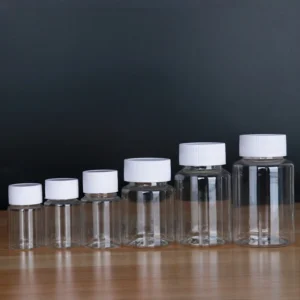
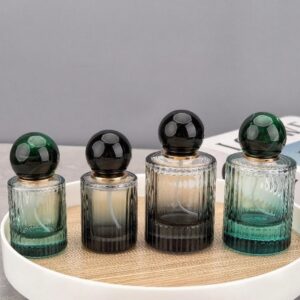
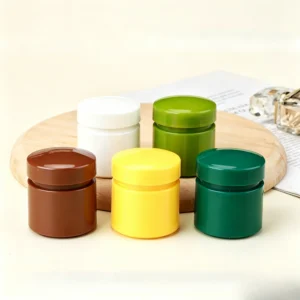
Choose the smallest format that lets the customer evaluate the product and that your filling process can handle consistently. Compare a sample vial, mini spray, or roll-on by product experience, closure, filling method, transport risk, decoration, and quote quantity. Do not assume a nominal volume, closure, material, leak-resistance claim, MOQ, or lead time applies to every product. Confirm those details against the exact SKU and formula.
For air travel in the United States, the TSA Liquids, Aerosols, and Gels Rule says liquids, aerosols, gels, creams, and pastes in carry-on baggage are limited to travel-sized containers of 3.4 ounces (100 milliliters) or less per item, and these items should be placed in a quart-sized bag for screening. Medical liquids and certain infant and child foods have separate exceptions; travelers should check the current TSA instructions. This is a passenger-screening rule, not a guarantee that a package is leak-proof or suitable for every destination. Check destination and carrier requirements before making a travel claim.
US liquid volume reference
For planning only, the NIST SP 811 conversion factors list 1 US fluid ounce as 29.57353 milliliters. The displayed values below are rounded theoretical unit conversions, not SKU capacities, fill tolerances, or TSA approval.
| Metric volume | Approx. US fl oz |
|---|---|
| 10 mL | 0.34 |
| 30 mL | 1.01 |
| 50 mL | 1.69 |
| 100 mL | 3.38 |
Confirm the exact product capacity, usable fill, closure, and formula compatibility with the supplier before quoting or ordering.
Start with the use case
A discovery set, a trial sample, and a travel retail product can need different packaging even when their fill volumes are similar. Start by identifying how the customer will use the product, how the units will be filled, whether the first order is a market test or recurring stock, and how the package will be transported.
- Does the customer need to spray, roll, drop, or simply open the sample?
- Will the brand fill the units manually, semi-automatically, or on an existing line?
- Will the package be carried, mailed, checked in luggage, or shipped in a parcel?
- Does the formula need compatibility testing with the package components?
- Is decoration required, or is a stock package acceptable for the first run?
These answers determine what the supplier should quote and what the brand should test. A volume label alone is not enough to select a package.
Compare sample vials, mini sprays, and roll-ons
Sample vials
A vial can suit a brand that wants a compact sample format and a simple evaluation experience. Confirm the actual fill volume, opening style, applicator, closure fit, and whether the sample can be filled without contaminating the outside of the package. Ask for a drawing or specification sheet for the exact vial. Do not describe a vial as the lowest-cost or lowest-risk option without a comparable quote and a completed transport test.
Mini sprays
A mini spray can suit a fragrance or mist product when the act of spraying is part of the customer experience. BOBOPKG lists travel and sample-related spray products, including 5 ml and 10 ml examples, on its spray bottle category page. The category also lists products with other materials and sizes, so open the exact product page before treating a size, material, pack quantity, or closure as available for a project.
Review the pump, actuator, cap, bottle, filling method, and product formula as one system. Request a sample and test the filled unit in the same orientation and transport conditions expected after launch.
Roll-ons
A roll-on can suit an oil or other product designed to be applied with a rolling ball. Review BOBOPKG’s roll-on bottle options, then confirm the ball and fitment material, closure, neck, fill volume, decoration, and formula compatibility for the selected SKU. A category label does not prove that every roll-on is suitable for every viscosity or travel condition.
What to verify before filling
- Capacity: Confirm nominal fill volume and any stated tolerance from the supplier. Ask whether the listed volume is nominal, usable fill, or brimful capacity.
- Closure: Confirm the closure type, fitment, liner or seal if applicable, and the filling or assembly process.
- Formula compatibility: Provide the formula or a representative sample and request a compatibility recommendation. Do not infer compatibility from the package material name alone.
- Leak testing: Agree on a test method, orientation, duration, temperature range, and pass criteria. A supplier statement such as “leak-proof” should be supported by the test scope.
- Transport: Test filled samples in the intended shipping and handling conditions. Air travel screening rules do not replace package testing.
- Decoration: Confirm printable area, artwork requirements, color limits, coating, and whether decoration changes MOQ or lead time.
- Commercial terms: Ask for the current MOQ, sample cost, unit price, tooling or setup cost, production lead time, and shipping terms for the exact variant.
How to compare a quote
Request comparable quotes instead of comparing a headline unit price. Each quote should identify the same fill volume, material, closure, decoration, pack quantity, and shipping basis. For a first market test, ask whether a stock version is available and whether the supplier can provide samples before a production order. For a custom launch, ask which changes affect MOQ, tooling, decoration, and lead time. Record the quote date because availability and commercial terms can change.
A practical quote request can include product type and intended application; target fill volume and acceptable range; formula family and known compatibility concerns; required closure and dispensing experience; expected first and repeat-order quantities; decoration and packaging requirements; destination country and shipping method; and requested samples with test acceptance criteria.
Continue your packaging search
- Compare wholesale spray bottle options
- Review roll-on bottle options
- Explore travel and sample packaging
For a quote, sample request, or compatibility question, contact BOBOPKG with the exact product link, formula information, target quantity, and destination.
FAQ
What is a travel-size bottle?
A travel-size bottle is a small container sized for carry-on travel and product sampling. Under current TSA screening rules, liquids, aerosols, gels, creams, and pastes in carry-on baggage are limited to travel-sized containers of 3.4 ounces (100 milliliters) or less per item, and the items should be placed in a quart-sized bag for screening. Medical liquids and certain infant and child foods have separate exceptions. Listed capacity is nominal — confirm actual fill volume for the exact SKU with your supplier.
Sources and scope
- TSA, “Liquids, Aerosols, and Gels Rule” (accessed 2026-10-15). Supports the U.S. carry-on screening limits and quart-sized bag instruction stated above; it does not certify a package or establish a global rule.
- BOBOPKG spray bottle category (accessed 2026-10-10). Supports the listed product examples; it does not support site-wide MOQ, compatibility, or leak-performance claims.
- BOBOPKG roll-on bottle category (accessed 2026-10-10). Supports the category destination; exact SKU facts must be checked on the selected product page.
 English
 Français
 Deutsch
 Español