Understanding Glass, Plastic, and Container Science to Make Informed Packaging Decisions
Brought to you by Bobo Packaging — bobopkg.com
Introduction: Why Packaging Science Matters for Your Brand
In the competitive landscape of e-commerce platforms like Shopify, Etsy, and Amazon, packaging is far more than a mere container for your product. It is a silent salesperson, a brand ambassador, and a critical guardian of product integrity. For small business owners and emerging brands, understanding the science behind packaging bottles and jars can be the difference between a product that thrives and one that fails to gain traction.
This comprehensive guide delves deep into the material science, manufacturing processes, barrier properties, and regulatory considerations that define modern packaging solutions. Whether you are launching a skincare line on Shopify, selling artisanal honey on Etsy, or distributing supplements through Amazon, this whitepaper will equip you with the knowledge to make packaging decisions that protect your product, enhance your brand, and satisfy your customers.
The global packaging market has reached unprecedented complexity, with the glass bottles and containers market alone valued at $87.42 billion in 2026, projected to grow to $143.91 billion by 2035 [hjglasspackaging.com]. Meanwhile, plastic packaging continues to dominate through innovation in materials like PET, HDPE, and sustainable alternatives. Understanding these materials at a scientific level enables small brands to compete effectively with larger competitors.
For small brands, packaging decisions carry disproportionate weight. Unlike large corporations that can absorb the cost of poor packaging choices, small businesses operate with limited margins and cannot afford product returns, negative reviews, or damaged reputations caused by packaging failures. A leaking bottle, a cracked jar, or a discolored container can generate a one-star review that haunts a brand for months. Conversely, thoughtful packaging that arrives intact, dispenses smoothly, and aligns with brand values can generate loyal customers and positive word-of-mouth.
1. The Material Science of Glass Packaging
1.1 Chemical Composition and Types of Glass
Glass is fundamentally an inorganic non-metallic material composed primarily of silica sand (approximately 70%), soda ash, and limestone. This ancient material has protected precious formulations for millennia, and its relevance in modern packaging science remains undiminished. Understanding the different types of glass is essential for selecting the appropriate container for your specific product.
Soda-Lime Glass
Soda-lime glass represents the most widely used glass type in cosmetic and food packaging. Composed of silica sand, soda ash, and limestone, this glass offers moderate chemical resistance at a relatively low production cost. It is the standard choice for lotion bottles, general cosmetic jars, and food containers where cost and availability are priorities over maximum optical clarity or chemical resistance. Soda-lime glass is fully recyclable and available in clear and various stock colors, making it versatile for branding purposes [sx-roman.com].
Borosilicate Glass
Borosilicate glass contains boron trioxide (B2O3) in addition to silica, which significantly improves chemical resistance, thermal shock resistance, and hydrolytic stability compared to soda-lime glass. Classified as Type I pharmaceutical glass under ISO 4802 and USP standards, borosilicate glass is the correct choice for essential oil bottles, serums with low pH or high concentrations of active acids, and any formulation where chemical interaction between the glass and contents is a concern [newraybottles.com]. Its higher manufacturing cost reflects the more complex production process, but for sensitive formulations, this investment is justified by superior performance.
Amber and Cobalt Glass
Colored glass variants, particularly amber and cobalt blue, provide critical UV protection for light-sensitive formulations. Amber glass blocks approximately 90% of UV rays, making it ideal for pharmaceuticals, essential oils, and skincare products containing photosensitive ingredients like vitamin C and retinol. Cobalt blue glass offers similar protection with distinctive aesthetic appeal. The color is achieved through the addition of metal oxides during the melting process, ensuring the protection is inherent to the material rather than a surface coating [jarsking.com].
1.2 The Manufacturing Process: From Sand to Bottle
Glass container manufacturing is a sophisticated three-stage operation involving the batch house (raw material handling), the hot end (melting and forming), and the cold end (inspection and finishing) [agriculture.institute]. Understanding this process helps appreciate the quality variations in glass packaging.
Raw Materials and Melting
The process begins with a carefully proportioned mixture of silica sand, soda ash, and limestone, along with recycled crushed glass known as cullet. Cullet is a critical ingredient that melts at lower temperatures than virgin raw materials, saving energy and reducing manufacturing costs. Modern facilities can use up to 90% recycled glass content. This mixture is heated in furnaces to approximately 1,500–1,600°C (2,700–2,900°F), creating molten glass with honey-like viscosity suitable for forming.
Forming Methods
Two primary forming methods dominate glass container production. The blow-and-blow method is commonly used for narrow-neck bottles such as perfumes and beverages. The press-and-blow method, using a metal plunger to physically press molten glass into a blank mold, is more commonly used for wide-mouth jars like those for creams and food products [lissonpackaging.com].
Annealing and Quality Control
After forming, bottles pass through an annealing lehr, where they are slowly cooled to remove internal stress. This step is critical for preventing cracking or warping during later use and temperature changes. Quality control at the cold end includes automated inspection for defects, thickness consistency, and structural integrity. Premium glass packaging undergoes additional surface treatments to improve scratch resistance and durability.
1.3 Barrier Properties and Product Protection
Glass offers unmatched barrier properties that make it the gold standard for product protection. Its chemical inertness means it does not leach plasticizers, antimony, phthalates, or other contaminants into products the way some plastic packaging materials do. Glass does not absorb fragrance molecules, essential oil terpenes, or active ingredients from formulations, ensuring that products smell, feel, and perform identically from first use to last.
A key scientific finding: Studies comparing fragrance retention in glass versus PET plastic bottles found that terpene-rich fragrance compounds permeated through 2mm PET walls at measurable rates even at room temperature, while glass showed zero permeation over a 12-month test period [sx-roman.com]. This has direct commercial consequences for fragrance and essential oil brands.
The oxygen transmission rate (OTR) through glass is effectively zero, compared to 0.03–0.06 cc per square meter per day for standard PET bottles. For products containing vitamin C, retinol, or natural antioxidants, this barrier difference can mean the difference between a product that maintains efficacy and one that degrades before the consumer finishes it.
2. The Science of Plastic Packaging Materials
2.1 PET (Polyethylene Terephthalate): The Versatile Workhorse
PET has become the dominant material for plastic bottles due to its unique combination of properties. As a thermoplastic polymer, PET offers excellent clarity, good barrier properties, and remarkable processability. Understanding its molecular structure and behavior is essential for leveraging its advantages while mitigating its limitations [zhenghaopackaging.com].
Material Properties
PET bottles weigh approximately one-tenth of equivalent glass bottles, dramatically reducing transportation costs and carbon footprint during distribution. The material offers transparency approaching that of glass, allowing consumers to view product color, texture, and quality. PET demonstrates good chemical stability for most food and beverage applications, resisting interaction with acids, oils, and common cosmetic ingredients. However, PET is not suitable for strong solvents, essential oils in high concentrations, or products requiring high-temperature processing above 60°C.
Manufacturing Process
PET bottle production primarily uses the injection-stretch-blow molding process. The first step involves heating PET resin to 200–280°C and injecting it into molds to form preforms. In the second step, preforms are reheated to their softening point (90–120°C), stretched vertically and horizontally, then inflated with compressed air to conform to the final bottle mold. This biaxial orientation aligns polymer chains, creating bottles with enhanced strength, clarity, and barrier properties while maintaining light weight [cssssy.com].
Barrier Limitations
While PET provides adequate barrier properties for many applications, it cannot match glass for long-term storage of sensitive formulations. Oxygen and carbon dioxide permeation occur at measurable rates, affecting products with extended shelf life requirements. PET also allows UV light transmission unless treated with UV-absorbing additives or coatings. For products containing sensitive actives, essential oils, or requiring multi-year stability, these limitations must be carefully considered.
2.2 HDPE (High-Density Polyethylene): The Durable Protector
HDPE represents a different class of plastic packaging, prioritizing durability and chemical resistance over clarity. This sturdy, opaque plastic with a slightly matte finish is commonly seen in thick, unbreakable jars for body butter, hand cream, and household products. Its molecular structure provides excellent resistance to moisture, chemicals, and impact.
Chemical Resistance Advantages
HDPE demonstrates superior chemical resistance compared to PET, making it suitable for products containing essential oils, alcohols, acids, and aggressive cleaning agents. Its tight molecular structure effectively locks out oxygen and moisture, keeping formulations fresh for extended periods. This makes HDPE ideal for body cream jars, hand cream containers, and products with active ingredients like hyaluronic acid or peptides [zhenghaopackaging.com].
2.3 PP (Polypropylene): The Heat-Resistant Alternative
Polypropylene offers unique advantages for specific packaging applications, particularly where heat resistance is required. PP can withstand hot-fill processes and is microwave-safe in many configurations, making it suitable for ready-to-eat meals, baby food, and products requiring sterilization. While less rigid than HDPE and not as clear as PET, PP provides excellent chemical resistance and is widely used for cosmetic cream jars, pharmaceutical containers, and food packaging where temperature stability is important.
3. Comparative Analysis: Glass vs. Plastic
3.1 Performance Comparison Matrix
| Property | Glass | Plastic (PET / HDPE) |
|---|---|---|
| Chemical Inertness | Excellent — No leaching | Good — Limited migration risk |
| Oxygen Barrier | Perfect — Zero permeation | Moderate — Measurable permeation |
| UV Protection | Amber/Cobalt: Excellent | Limited — Additives required |
| Weight | Heavy (180–250g typical) | Light (18–30g typical) |
| Impact Resistance | Fragile — Breakage risk | Excellent — Shatterproof |
| Recyclability | Infinite — No quality loss | Limited — Degrades over cycles |
| Unit Cost | Higher (2–3x plastic) | Lower — Cost effective |
| Premium Perception | High — Luxury association | Moderate — Functional image |
| Temperature Range | −30°C to 300°C | −20°C to 60°C (PET) |
3.2 Cost Analysis: Beyond Unit Price
Cost evaluation for packaging must extend beyond the per-unit purchase price to include the total cost of ownership. Glass bottles typically cost 2–3 times more than equivalent PET bottles at the unit level. However, this comparison changes significantly when factoring in the complete supply chain.
Transportation costs favor plastic dramatically. A typical glass bottle weighs 180–250g, while an equivalent plastic bottle weighs 18–30g. This tenfold weight difference translates directly to shipping costs, particularly for e-commerce businesses where dimensional weight pricing often applies.
Recent market developments have altered the cost equation: recycled PET now sells at a 20% premium over virgin plastic in many markets, making glass more price-competitive than previously. Additionally, as sustainability regulations tighten globally, the cost of plastic packaging may increase through extended producer responsibility fees [hjglasspackaging.com].
3.3 Consumer Perception and Brand Positioning
Packaging material sends powerful signals about brand positioning and product quality. Multiple consumer research studies have demonstrated that identical formulations packaged in glass are consistently perceived as more premium, more effective, and worth higher price points than the same formulation in plastic. This perception premium is particularly strong in skincare, fragrance, and wellness categories.
The 2026 market data reveals a significant trend: 89% of premium brands surveyed reported plans to switch from plastic to glass packaging [hjglasspackaging.com]. For small brands competing in premium categories, glass packaging can provide a competitive advantage in perceived value.
Consumer preferences vary by demographic. Gen Z consumers demonstrate strong preference for sustainable packaging, with 73% preferring eco-friendly products and 61% willing to pay more for sustainable packaging [valiantpackaging.com].
4. Regulatory Compliance and Safety Standards
4.1 Food Contact Materials Regulations
Packaging materials must comply with strict regulations governing food contact substances. In the United States, FDA 21 CFR establishes requirements for materials that contact food. The European Union’s EC 1935/2004 provides similar framework requirements, while specific migration limits are defined in EU 10/2011 for plastic materials [newraybottles.com].
Glass is universally recognized as a safe food contact material due to its chemical inertness. It contains no BPA, phthalates, or other chemicals of concern that could leach into products. Plastic materials require more extensive documentation to demonstrate compliance, including certificates of analysis showing compliance with migration limits for substances like antimony, acetaldehyde, and heavy metals.
4.2 Pharmaceutical and Cosmetic Packaging Standards
Pharmaceutical packaging operates under the most stringent standards. USP Chapter 660 establishes requirements for glass containers, categorizing glass into Type I (borosilicate), Type II (treated soda-lime), and Type III (soda-lime). The European Pharmacopoeia (EP 3.2.1) provides equivalent standards, covering ampoules, vials, bottles for injection, eye drops, and oral liquids. ISO 719 and ISO 720 define hydrolytic stability tests that evaluate chemical inertness by measuring the ability of glass to release soluble alkaline ions under high-temperature water exposure.
For cosmetic applications, ISO 22716 (Good Manufacturing Practices for Cosmetics) provides quality framework requirements. Brands making efficacy claims for active ingredients should consider pharmaceutical-grade packaging to support product stability claims and consumer trust.
5. Sustainability and Environmental Impact
5.1 The Glass Advantage: Infinite Recyclability
Glass offers unique sustainability credentials: it can be recycled indefinitely without quality degradation. Unlike plastic, which degrades through thermal cycling and polymer chain breakdown during reprocessing, glass maintains its chemical composition and performance properties through unlimited recycling loops. This infinite recyclability makes glass the ideal material for circular economy models.
However, glass production is energy-intensive, requiring furnace temperatures of 1,500–1,600°C. The carbon footprint of virgin glass production is higher than plastic on a per-unit basis. This impact is mitigated by using recycled cullet, which reduces energy consumption by approximately 3% for every 10% of cullet used. Modern facilities using 90% recycled content achieve carbon footprints competitive with plastic alternatives.
Glass presents no microplastic pollution risk. When glass degrades in the environment, it becomes inert sand without releasing harmful substances. This characteristic addresses growing consumer and regulatory concern about plastic pollution in oceans and ecosystems.
5.2 Plastic Sustainability Challenges and Innovations
Plastic packaging faces significant sustainability challenges. While technically recyclable, actual recycling rates vary dramatically by region and material type. Each recycling cycle degrades plastic polymer chains, limiting the number of times material can be reused before downcycling or disposal becomes necessary [valiantpackaging.com].
The industry is responding with innovations: bio-based PET derived from plant sources, post-consumer recycled (PCR) content, and new barrier coatings that improve plastic performance while maintaining recyclability. Regulatory pressure is accelerating these transitions through extended producer responsibility (EPR) schemes that make brands financially responsible for end-of-life packaging management.
6. Selection Framework for Small Business Owners
6.1 Product Formulation Compatibility Matrix
Oil-Based Products (Facial Oils, Hair Serums, Essential Oils): Best — Glass, HDPE, Aluminum. Avoid — PET without chemical resistance testing, as oils can degrade certain plastics causing leaching.
Water-Based Products (Toners, Micellar Water, Lightweight Lotions): Best — PET, PP, Glass, PETG. These materials offer moisture barriers without interacting with water-based formulations.
Cream & Emulsion Products (Moisturizers, Body Butters, Thick Serums): Best — PP, HDPE, Glass, Acrylic. Rigid structures prevent dispensing issues; materials resist emulsion breakdown.
Active Ingredient Products (Vitamin C, Retinol, AHAs, Pharmaceutical): Best — HDPE, Amber/Cobalt Glass, Aluminum, Airless PP. Superior chemical resistance and light protection preserve active ingredient efficacy [jarsking.com].
6.2 Brand Positioning Strategy
Luxury & Premium: Heavy-wall Glass, Frosted Glass, Acrylic, Aluminum, Bamboo — signals quality and justifies premium pricing.
Sustainable & Eco-Conscious: PCR Plastic, Glass, Bamboo, Refillable Systems — transparent sustainability credentials drive millennial and Gen-Z purchasing decisions.
Value & Accessibility: PET, PP, PE — cost-efficiency and lightweight durability build brand loyalty at accessible price points.
6.3 Technical Requirements Checklist
- UV Protection: Amber Glass, Cobalt Glass, Opaque HDPE, Aluminum — blocks light wavelengths that degrade photosensitive ingredients.
- Drop & Impact Resistance: HDPE, PP, ABS — flexible materials absorb shock without cracking.
- Barrier Protection (Oxygen/Moisture): Glass, Aluminum, Airless Systems, EVOH-layer Plastics — extends shelf life by preventing oxidation and contamination.
- Lightweight & Shipping Efficiency: PET, PP, Aluminum — reduces carbon footprint and logistics costs.
7. Practical Implementation Guide
7.1 Sourcing and Supplier Evaluation
Quality Certifications to verify: ISO 9001 (Quality Management), ISO 14001 (Environmental Management), FDA registration for food contact materials, USP compliance for pharmaceutical applications.
Minimum Order Quantities (MOQ):
- Stock bottles: Often available in quantities as low as 100–500 units
- Custom colors: Typically require 5,000–10,000 units
- Custom molds: Usually require 50,000+ units to justify tooling costs
Lead Times: Stock items: 1–2 weeks | Custom decoration: 4–6 weeks | Custom manufacturing: 8–12 weeks
7.2 Testing and Validation Protocol
Before committing to full production, implement a testing protocol:
- Compatibility Testing: Fill samples with actual product formulation. Store at accelerated conditions (40°C, 75% humidity) for 3 months. Evaluate for chemical interaction, deformation, and barrier failure.
- Shipping Simulation: Subject packaged products to vibration testing, drop testing from standard heights, and temperature exposure evaluation during transit.
7.3 Cost Optimization Strategies
- Start with stock bottles in standard sizes and colors to minimize tooling costs and lead times.
- Use decoration for differentiation: labels, screen printing, and sleeves offer customization without custom molds.
- Consolidate orders with other small brands to meet higher MOQs for better pricing.
- Consider regional suppliers to reduce shipping costs and lead times.
- Evaluate total cost of ownership including shipping, damage rates, and customer satisfaction.
8. Future Trends and Emerging Technologies
8.1 Sustainable Material Innovations
The packaging industry is experiencing rapid innovation in sustainable materials. Bio-based plastics derived from renewable sources like sugarcane and corn are entering commercial production, offering reduced carbon footprints while maintaining performance characteristics similar to petroleum-based alternatives. Advanced recycling technologies are improving the quality of recycled plastics. Mono-material packaging designs are gaining traction as a solution to recycling complexity.
8.2 Smart Packaging Integration
Smart packaging technologies are becoming more accessible to small brands. QR codes and NFC tags enable direct consumer engagement, providing authentication, usage instructions, and brand storytelling. Active packaging systems that interact with product contents are emerging from pharmaceutical applications into cosmetics and food, including oxygen scavengers, moisture regulators, and antimicrobial packaging.
8.3 Regulatory Evolution
Regulatory frameworks for packaging are evolving rapidly. Extended Producer Responsibility (EPR) schemes are expanding globally, making brands financially responsible for packaging end-of-life management. Chemical transparency requirements are increasing, with regulations like California’s Proposition 65 and the EU’s REACH requiring disclosure of potentially harmful substances in packaging. Glass’s inherent chemical inertness provides a compliance advantage in this environment.
Conclusion: Making Informed Packaging Decisions
The science of packaging bottles and jars encompasses material chemistry, manufacturing engineering, barrier physics, and regulatory compliance. For small business owners building brands on Shopify, Etsy, and Amazon, understanding these scientific principles enables strategic decisions that protect products, satisfy customers, and support brand positioning.
Glass and plastic each offer distinct advantages. Glass provides unmatched barrier protection, chemical inertness, infinite recyclability, and premium perception. Plastic offers lightweight durability, cost efficiency, and design flexibility. The optimal choice depends on your specific product formulation, brand positioning, supply chain requirements, and sustainability goals.
As the packaging industry evolves with new materials, technologies, and regulations, the fundamental principles of material science remain constant. Glass will continue to represent the gold standard for product protection and sustainability. Plastic will continue to innovate toward improved performance and environmental responsibility. Understanding these materials at a scientific level positions your brand to adapt and thrive as the market evolves.
At Bobo Packaging, we are committed to helping small brands navigate these complex decisions. Our expertise in glass and plastic packaging solutions, combined with our understanding of e-commerce requirements, enables us to support your brand’s growth with packaging that performs as beautifully as it looks.
About Bobo Packaging
Bobo Packaging (bobopkg.com) specializes in providing high-quality glass and plastic bottles, jars, and containers for small businesses, entrepreneurs, and emerging brands. We understand the unique challenges facing Shopify sellers, Etsy creators, and Amazon merchants, and we offer packaging solutions that combine quality, affordability, and minimum order quantities appropriate for growing businesses.
Our product range includes:
- Glass bottles and jars in soda-lime, borosilicate, and amber glass
- PET and HDPE plastic bottles and containers
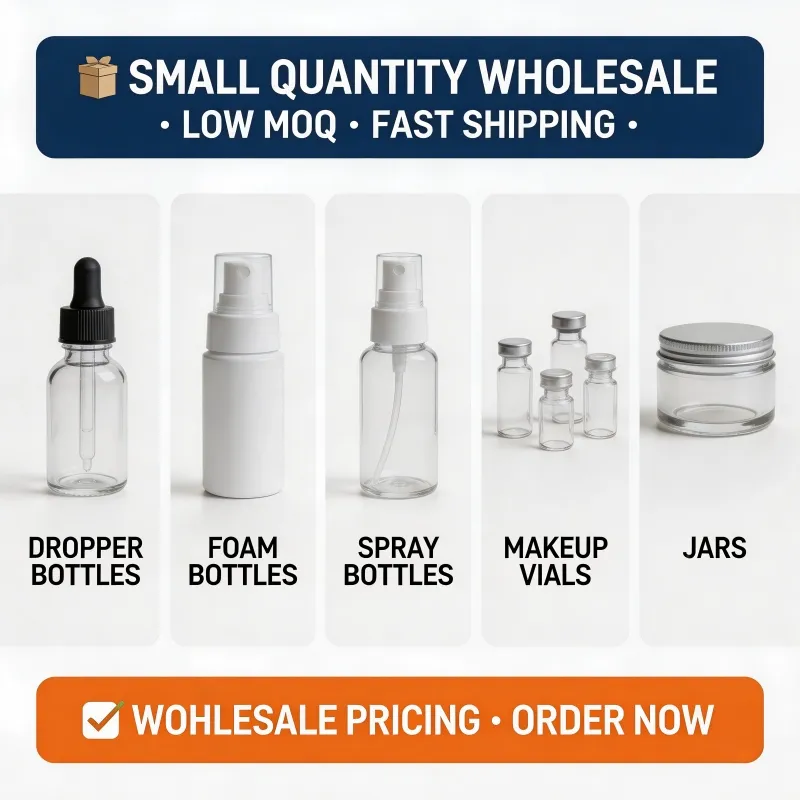
- Cosmetic packaging including dropper bottles, pump bottles, and cream jars
- Food and beverage containers meeting FDA and international standards
- Custom decoration and labeling services
Contact us to discuss your packaging needs and discover how we can help your brand succeed.
Ready to find the perfect packaging for your brand?
References & Sources
- [1] hjglasspackaging.com — “Glass vs Plastic Bottles 2026: Why 89% of Premium Brands Are Switching Back” https://hjglasspackaging.com/…
- [2] newraybottles.com — “Why Glass Bottles Are Still the First Choice for Food, Beverage and Cosmetic Packaging” https://www.newraybottles.com/…
- [3] sx-roman.com — “What Are the Different Types of Glass Cosmetic Bottles and How Do You Choose the Right One” https://www.sx-roman.com/…
- [4] jarsking.com — “Material Selection Defines Your Product Success” https://www.jarsking.com/…
- [5] valiantpackaging.com — “Glass vs Plastic Bottles: The Ultimate Guide for Sustainable Packaging in 2026” https://valiantpackaging.com/…
- [6] zhenghaopackaging.com — “Plastic Cream Jars: HDPE vs PET for Skincare Applications” https://www.zhenghaopackaging.com/…
- [7] agriculture.institute — “Manufacturing Processes of Packaging Materials: From Raw Materials to Final Product” https://agriculture.institute/…
- [8] lissonpackaging.com — “Overview of Bottle Manufacturing Processes by Material” https://www.lissonpackaging.com/…
- [9] smartbuy.alibaba.com — “How to Choose the Best Food Packaging Bottle: A Complete Buying Guide” https://smartbuy.alibaba.com/…
- [10] honestbeeltd.com — “What Are the Characteristics and Materials of Honey Jars as a Packaging Type” https://zh.honestbeeltd.com/…
- [11] cssssy.com — “PET Plastic Bottle Manufacturing Process: Why Suitable for Mass Production” http://www.cssssy.com/…
- [12] hongyuanbottle.com — “Six Key Plastic Bottle Processes” https://www.hongyuanbottle.com/…
- [13] lygdxbz.com — “PET Plastic Bottles vs Glass Bottles: Which Is Better?” https://www.lygdxbz.com/…
 English (United States)
  Spanish
  French
  German
  English (UK)
  Japanese
  Korean
  Russian
  Arabic