A dropper bottle for facial serum is not just a glass bottle with a pipette. The bottle, pipette, bulb, and closure work as one package, and the formula and filling process affect whether that package suits a product. Buyers should shortlist a format from the target fill quantity and brand requirements, then evaluate production samples with the actual formula before approving a bulk order.
BOBOPKG lists dropper-bottle options in its dropper bottle collection. The collection is a starting point for comparing available formats, not evidence that a particular option is compatible with every serum. Confirm the current specification and sample availability for the product you are considering.
Start with the serum and how customers will use it
Before comparing bottle styles, write down the product requirements that packaging must meet:
- The intended fill quantity and the dimensions available in the carton or retail display.
- The serum’s texture and any formula-specific packaging requirements supplied by your formulation or quality team.
- How the customer is expected to dispense the product, including whether the pipette is part of the intended experience.
- The filling method, decoration, label area, and any secondary packaging constraints.
- The markets where the product will be sold and the labeling or packaging requirements that apply there.
These are inputs for a supplier discussion, not assumptions about what a particular bottle can do. If the formula has specific compatibility, light-protection, or dispensing requirements, ask the responsible technical team to define the acceptance criteria before selecting a pack.
Compare the complete dropper assembly
A dropper pack includes several parts that should be evaluated together: the bottle, neck and closure interface, pipette, and bulb. Ask the supplier to identify the materials and specifications for the offered configuration, including the actual closure and pipette supplied with the bottle. Do not assume that a visually similar replacement component has the same fit or performance.
| What to compare | What to confirm with the supplier | What to check in a sample |
|---|---|---|
| Bottle capacity and dimensions | Available variants, stated capacity basis, and external dimensions | Fit in the intended carton, display, and filling setup |
| Bottle and component materials | Material specification for the bottle, pipette, bulb, and closure | Appearance and condition after filling and handling |
| Neck and closure fit | Matching neck finish and the exact closure/pipette combination | Assembly fit, opening and closing, and visible damage |
| Dispensing | Whether the proposed pipette is available for the product configuration | Dispensing with the actual formula using the intended user method |
| Leakage and transport | What the supplier can document for the chosen configuration and test conditions | A buyer-defined handling and transport check using filled samples |
| Decoration and labeling | Printable or labelable areas and available decoration options | Legibility, adhesion, and appearance on the supplied sample |
A supplier’s response should refer to the exact bottle and closure combination being quoted. If a performance statement depends on a test, request the test method, conditions, and result for that configuration rather than relying on a general claim.
Select a capacity from the use case, not a generic rule
There is no single capacity that is best for every facial serum. The target fill quantity, product positioning, retail format, and buyer requirements determine which available option is worth sampling. Compare the supplier’s stated capacity and dimensions with your filling and packaging requirements; do not infer usable fill volume or fill tolerance from a product photograph or a variant name.
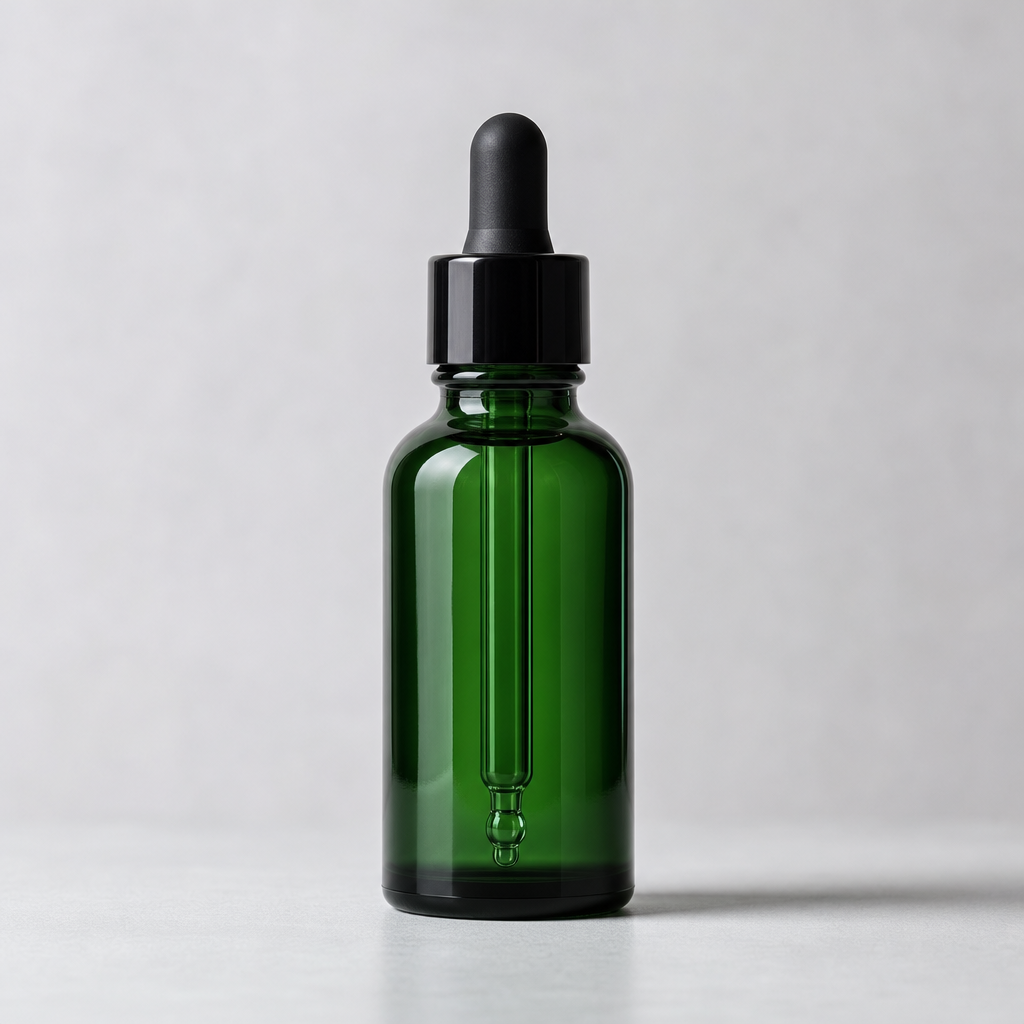
For example, BOBOPKG lists a dark-green glass dropper bottle described for facial oils in several stated capacity variants. That first-party listing shows that the catalog includes a format presented for facial oils; it does not establish that the same pack is suitable for a different serum formula. Treat it as a product to investigate, then request the current specification and test samples with the intended formula.
Test samples before approving a bulk order
Use a written sample checklist so the packaging, product, and procurement teams evaluate the same configuration:
- Confirm the bottle, closure, pipette, and bulb match the quoted specification.
- Fill samples with the actual formula using the intended filling process, where feasible.
- Check dispensing using the intended customer instructions and record any operational issues.
- Inspect the assembled pack for fit, closure operation, visible leakage, and damage under buyer-defined handling conditions.
- Review decoration, label placement, and the packed product in its intended secondary packaging.
- Record the sample result and obtain written confirmation of the production specification before placing a bulk order.
This checklist is a procurement workflow, not a claim that any particular test guarantees compatibility or transport performance. Define acceptance criteria with your product and quality teams and ask the supplier which records are available for the selected configuration.
Questions to include in a quote request
Send the supplier the target fill quantity, formula requirements that can be shared, destination market, estimated order quantity, decoration needs, and required delivery window. Ask for:
- Current bottle, pipette, bulb, and closure specifications for the offered combination.
- Available capacity variants and their dimensions.
- Sample availability and the cost or process for obtaining samples.
- Any test documentation for the exact configuration, including the conditions and scope of each test.
- Current MOQ, lead time, customization options, and quote validity for your destination and quantity.
These commercial terms can vary by configuration, quantity, customization, and destination. Confirm them in the current written quote rather than relying on a general page statement.
Foire aux questions
What should I check when choosing a dropper bottle for facial serum?
Check the target fill quantity, bottle dimensions, complete pipette and closure specification, formula-specific requirements, dispensing with the actual serum, decoration, and sample results. Confirm details against the exact configuration offered by the supplier.
Is a glass dropper bottle automatically suitable for a serum?
No. A bottle material by itself does not establish compatibility for a formula or prove that the complete dropper assembly meets the product’s requirements. Request the relevant specifications and test the proposed pack with the actual formula.
How do I choose the right serum bottle capacity?
Start with the intended fill quantity and the product’s retail and filling requirements, then compare available supplier variants and dimensions. Ask the supplier to state the capacity basis and verify the pack through samples; do not treat a variant name as a fill-tolerance specification.
Should I test the pipette with the actual formula?
Yes. Evaluate the proposed bottle, pipette, bulb, and closure as the complete assembly with the intended formula and use method. Agree on acceptance criteria with the responsible technical team and record the sample configuration.
What should I send with a wholesale inquiry?
Include the target quantity, destination, desired fill quantity, decoration needs, required timing, and any formula or packaging requirements you are able to share. Ask the supplier to confirm the current component specifications, sample process, MOQ, lead time, and quote terms in writing.
Next step
Compare available formats in the dropper bottle collection and review BOBOPKG’s skincare packaging options. For current specifications, sample availability, MOQ, lead time, and pricing, Contacter BOBOPKG with your target quantity and destination.
 English
 Français
 Deutsch
 Español