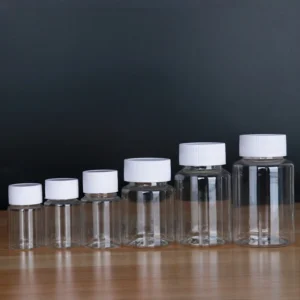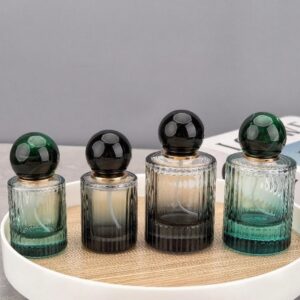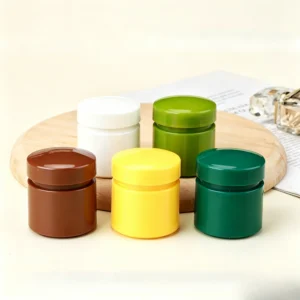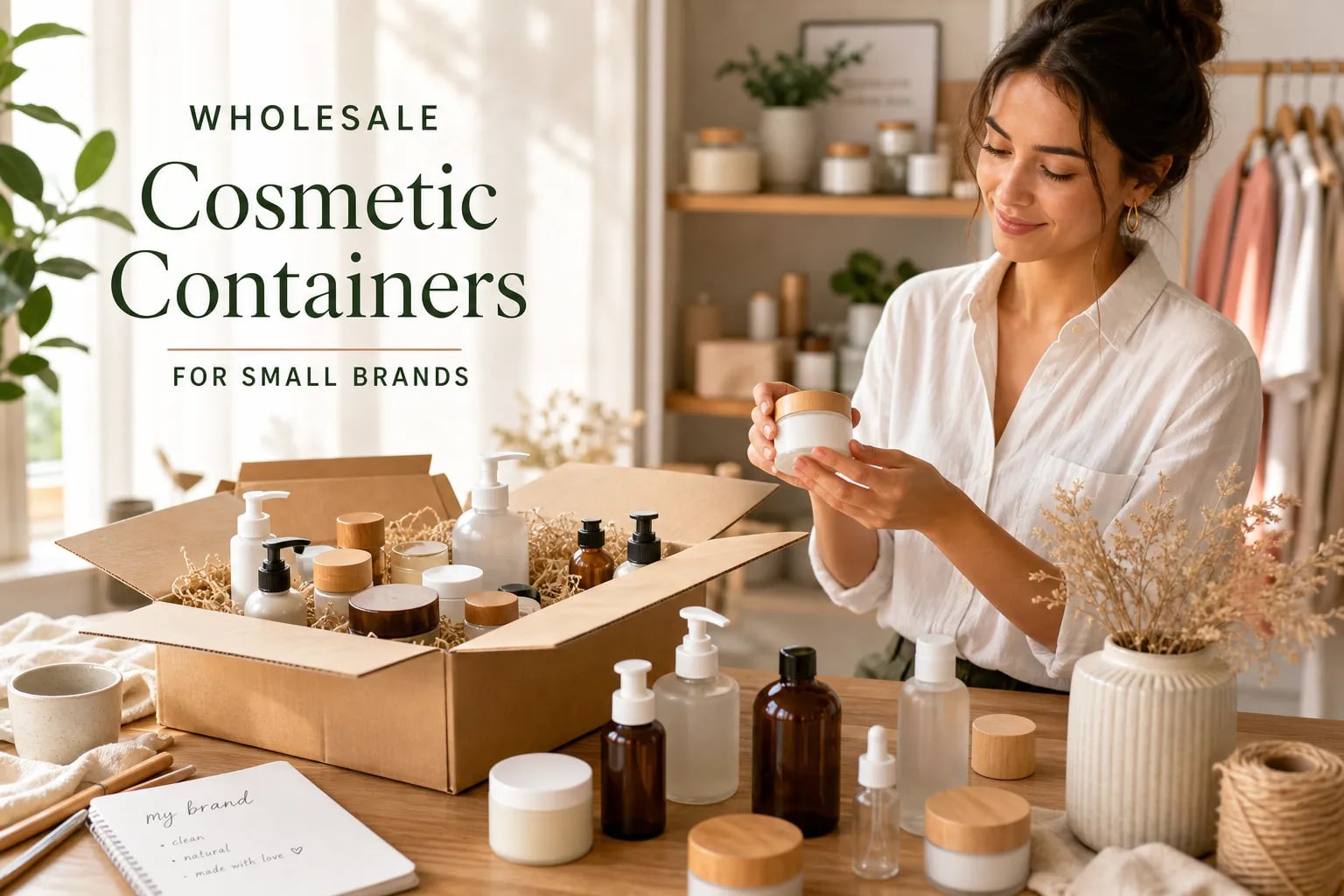
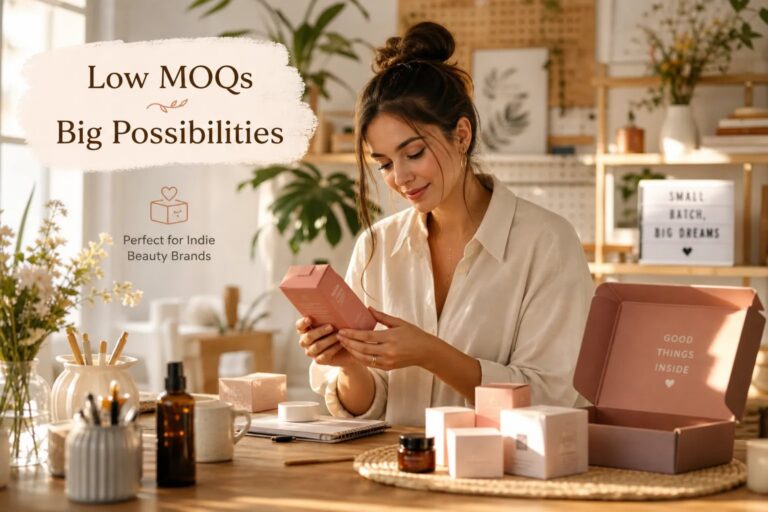
Finding cosmetic containers wholesale that actually work for small brands is harder than it should be. Most indie founders discover the hard way that “wholesale” often means high minimum orders that are far out of reach, and the gap between those minimums and what a growing brand actually needs is one of the biggest early sourcing mistakes in the industry. You spend weeks researching containers, fall in love with a jar style, and then hit a minimum order that would tie up a significant chunk of your operating budget on packaging alone.
This guide cuts through that frustration. You’ll find a practical breakdown of how to evaluate bulk cosmetic packaging suppliers, decode pricing tiers, understand MOQ requirements, match container materials to your formula, and avoid the sourcing traps that burn small brands early. Suppliers like BOBOPKG have quietly changed what cosmetic containers wholesale looks like for small brands, but getting there requires knowing what questions to ask first.
Start with what “wholesale” actually means in this context, because the term gets used loosely and that causes real confusion at checkout. Once you understand the distinction between stock and custom orders, everything else, pricing, MOQs, lead times, starts to make sense.
What “wholesale” really means for small beauty brands
Stock containers vs. custom orders: two very different buying experiences
Wholesale cosmetic packaging splits into two completely different buying tracks: stock containers and custom orders. Stock containers are standard shapes already sitting in a warehouse, ready to ship with low or no minimums. Custom orders involve bespoke molds, printed labels, or brand-specific specs that operate on entirely different pricing structures and lead times.
Stock wholesale is genuinely accessible. Many suppliers sell standard jars, bottles, dropper bottles, and tubes from inventory in quantities as low as 50 to 500 units. Custom work is a different story: expect minimums of 1,000 to 5,000 units and production lead times that can stretch 6 to 12 weeks for overseas factory-direct orders. Small brands often approach suppliers expecting custom results at stock prices and timelines, and that mismatch leads to either frustration or serious overspending.
Why MOQ is the number that actually determines your options
MOQ (minimum order quantity) is the threshold that either opens or closes the door to a supplier. Suppliers set MOQs based on production and logistics economics, not to be difficult. A supplier with domestic stock can afford to sell you 100 units of a cream jar because those units are already manufactured and warehoused. A factory producing to order needs a larger commitment before production makes financial sense.
Typical stock wholesale MOQs range from no minimum (some domestic repacker-style suppliers) to 50 to 500 units for true wholesale access. Custom decorated orders commonly start at 1,000 to 5,000 units, and custom mold programs can require more. The practical takeaway: prioritize suppliers whose stock MOQs match your current production volume, then plan your custom work for when you can actually absorb those minimums without strain.
The supplier evaluation criteria that actually matter
Catalog depth, material variety, and fill-volume coverage
A supplier’s catalog tells you whether you’ll be able to grow with them or whether you’ll eventually outgrow the relationship. A wide SKU range covering glass, PET, PP, airless pumps, dropper bottles, spray bottles, and jars means fewer supplier handoffs as your product line expands. Every additional vendor you bring in multiplies your logistics, your billing relationships, and your quality control headaches.
Check fill-volume coverage specifically. Do they carry the 15ml, 30ml, 50ml, and 100ml sizes you need across the same container styles? Gaps in a catalog force you into multi-vendor sourcing faster than you’d expect. Material breadth is also a signal of supplier seriousness. Suppliers offering UV-protective glass, PET, and PP across consistent container styles are more reliable long-term partners than those carrying a single substrate.
Sample policy, lead times, and what the ordering experience tells you
Always request samples before committing to a bulk order. A supplier’s sample policy reveals a lot: do they charge for samples, how fast do they ship, and how closely does the sample match the production unit? Any significant deviation between a sample and the production version is a quality control signal worth taking seriously.
Lead times for stock items from U.S.-stocked suppliers typically run 3 to 7 business days, compared to 6 to 12 weeks for factory-direct overseas orders. Understand whether a supplier’s quoted lead time includes order processing or just shipping time. The ordering experience itself matters too. If it’s hard to get a quote, navigate the site, or reach a real person before you buy, that friction only scales up when you’re managing a growing brand with tighter production timelines.
Cosmetic containers wholesale: glass, PET, or PP
When glass is the right call for skincare and wellness products
Glass is chemically inert. It won’t react with actives like retinol, L-ascorbic acid, AHAs, or essential oils, which makes it the default choice for any formula where ingredient stability is non-negotiable. For light-sensitive products, including vitamin C serums, facial oils, botanical extracts, and CBD products, UV-protective amber or violet glass adds a genuine preservation benefit beyond aesthetics.
The tradeoffs are real: glass is heavier, more expensive to ship, and more breakable than plastic. For premium positioning and formula integrity, those costs are often worth absorbing. Go in with clear eyes about what glass packaging does to your per-unit landed cost, especially if you’re shipping direct to consumers.
When PET or PP makes more practical sense
PET (polyethylene terephthalate) is lightweight, crystal clear, and impact resistant. It works well for toners, lightweight lotions, and water-based formulas where visual presentation and lower shipping cost matter more than formula reactivity concerns. That said, PET has limits: it’s less compatible with high-alcohol formulas, strong acids and alkalis, and aggressive solvents. Compatibility testing before a bulk order is non-negotiable if your formula falls in those categories.
PP (polypropylene) handles the widest range of cosmetic formulas, including oily, lipid-rich, and cream textures. It’s the material behind most cream jars, pump heads, and closures. It’s the most chemically forgiving of the three, even if it lacks the premium aesthetic of glass or the clarity of PET. If your formula is heat-filled, oil-heavy, or surfactant-based, PP is often your safest substrate choice.
How cosmetic containers wholesale pricing tiers work
Typical per-unit price ranges at different order volumes
Wholesale pricing on cosmetic containers is ladder-based: the more you order, the lower your cost per unit. For a standard 30ml glass cosmetic jar, published wholesale pricing from major suppliers ranges from roughly $0.37 per unit at 500 units down to $0.26 per unit at 10,000 units. For 50ml containers in PET plastic, wholesale cosmetic bottles from aggregated listings run $0.15 to $0.25 per unit at volume, while premium glass equivalents typically land in the $0.35 to $0.60 range depending on supplier and finish.
For reference across order sizes: 30ml containers commonly run $0.25 to $1.90 at 100 units and drop to $0.12 to $1.62 at 500 to 1,000 units. These ranges reflect meaningful variation by container style, material, and finish. An acrylic double-wall jar sits at a different price point than a simple glass bottle or an airless pump, even at the same fill volume. Use these numbers as benchmarks, not guarantees.
When to use stock pricing vs. requesting a custom bulk quote
For most small brands in early production, buying from stock at published wholesale prices is faster and more predictable than entering a custom quote process. Stock orders ship within days to weeks; a custom quote can take a week just to receive. The speed advantage of stock sourcing matters when you’re trying to hit a product launch date or reorder ahead of a sales event.
Custom bulk quotes make sense once you know exactly what you need: a specific size, material, finish, and closure combination that isn’t available in standard stock. At that point, a quote-based conversation often unlocks better per-unit pricing than published tiers. Setup fees for custom work, including color, printing, and custom molds, are almost always quote-based. Treat any supplier who publishes a flat setup fee without knowing your project specifications with skepticism.
Where to source bulk cosmetic packaging: an honest supplier overview
BOBOPKG: built for brands that need wholesale without factory-scale minimums
BOBOPKG is worth leading with because it’s built around the exact problem this guide addresses. With a deep catalog spanning glass bottles, dropper bottles, cream jars, airless pumps, spray bottles, candle tins, and PET containers, the selection covers almost every container a beauty or wellness brand needs across its full product range. That breadth means you can source consistently as your line grows rather than hunting for new suppliers every time you add a SKU.
The key differentiator is low MOQ access to a professional-grade inventory. A spa owner who needs 100 amber glass dropper bottles or an indie skincare founder who wants to test a small run of violet glass serum bottles can order those quantities without a factory-scale commitment. For light-sensitive formulas, BOBOPKG stocks UV-protective amber and violet glass, so formula preservation is built into the catalog rather than treated as a special request. Bulk pricing and custom quotes are available for brands scaling into larger production runs, making it a workable option whether you’re placing your first cosmetic containers wholesale order or managing ongoing reorders at volume.
Other U.S.-based suppliers worth knowing
Specialty Bottle and Cosmetic Packaging Now are commonly used by indie brands who need no-minimum entry points on stock items. They’re useful for test runs and one-off orders, but their catalogs are narrower than a full-range wholesale supplier, which can become a limitation as your product line grows.
SKS Bottle and Packaging and The Cary Company offer broader selections across plastic and glass containers with volume-discount pricing. Both serve small repacks and larger wholesale orders, making them workable for brands at different stages. TricorBraun and Kaufman Container are better fits for established brands that need custom packaging programs, supply agreements, and packaging engineering support. They’re not the right starting point for a brand ordering in the 100 to 500 unit range.
What to watch out for when sourcing directly from overseas marketplaces
Direct factory sourcing through overseas wholesale marketplaces can offer very low per-unit pricing, but it comes with tradeoffs that hit small brands hardest. High MOQs (often 1,000 to 5,000 units minimum), long lead times (4 to 12 weeks end-to-end), inconsistent quality control, and limited recourse when something goes wrong are all real risks. For a brand that can’t absorb thousands of units of the wrong container, the per-unit savings rarely justify the exposure.
The right wholesale relationship includes reliable domestic stock, predictable lead times, and an easy path to reordering. Those structural qualities matter more than the lowest possible per-unit price, especially before you’ve proven your production volume and container compatibility with real formula runs.
How to navigate MOQ requirements without overcommitting your budget
Reading an MOQ policy before you place an order
MOQ policies aren’t always prominently listed. Some suppliers post it per SKU; others reveal it only during checkout or when you request a quote. Always confirm MOQ before spending time researching a supplier’s product pages. Discovering a 1,000-unit minimum at checkout after an hour of browsing is a waste of time you can’t afford.
Pay attention to whether the MOQ applies to a single SKU or across your entire order. Some suppliers allow you to hit a dollar-value minimum spread across multiple products, which is far more flexible than a per-SKU unit minimum. Stock-based suppliers with low MOQs also give you the ability to test a container with a real formula run before you’re committed to thousands of units, and that’s where most sourcing mistakes get caught before they become expensive.
Strategies for testing packaging before you scale into bulk
The reliable sequence is: samples first, then a small production run of 50 to 200 units, then your full bulk order. Use that small run to test labeling compatibility, fill volume, closure seal, and formula stability in the actual container under real production conditions. What looks right in a sample can behave differently when you’re filling at production speed.
If a supplier doesn’t offer samples or a small-lot entry point, that’s a structural mismatch with where your brand is right now. Move on to one that does. As you scale, use your order history to negotiate better per-unit pricing at the next quantity tier. Many suppliers with bulk cosmetic containers pricing ladders will consider lower rates once you can demonstrate consistent repeat volume.
Sustainable container options and what eco specs actually tell you
PCR, refillable, and biobased containers at wholesale
The most specific sustainability specs to look for when sourcing wholesale cosmetic jars and bottles are PCR-PET (post-consumer recycled PET), PCR HDPE, and biobased HDPE. Some suppliers explicitly list these resin specs, which makes evaluation much cleaner than vague “eco-friendly” claims that don’t tell you anything about actual material content. If a supplier can’t tell you the specific resin and recycled-content percentage, the sustainability claim is marketing language, not a material specification.
Refillable packaging systems are gaining real ground in skincare. Airless bottles and pump containers designed for refill inserts reduce per-unit waste without requiring the customer to purchase a new primary container each time. Glass containers, particularly amber and violet glass options already stocked for formula preservation, let you hit both formula integrity and end-of-life recyclability goals from a single container type.
What certifications and eco claims to actually ask for
Most wholesale suppliers in this space publish material specs rather than third-party certifications. That means asking specific questions: What percentage is PCR content? Is the biobased HDPE certified? Who verifies the recyclability claim? Named certifications worth asking about include GRS (Global Recycled Standard) for recycled-content verification, FSC for any paperboard secondary packaging, and EN 13432 for compostability claims.
For small brands building a sustainable brand story, the safest approach is to choose containers with verifiable recycled content or inherently recyclable materials, glass, aluminum, or mono-material PET, and document your supplier’s published specs. PCR-PET has the clearest third-party certification ecosystem of the commonly available wholesale cosmetic packaging options. That documentation matters when your customers ask, and they will ask.
From shortlist to first order: practical next steps
How to evaluate sample quality before committing to bulk
When samples arrive, put them through three tests before moving forward:
- Physical fit: Does the closure seal properly, does the pump actuate cleanly, and is the fill line where your formula volume needs it to be?
- Formula compatibility: Leave your actual formula in the container for two to four weeks and check for discoloration, separation, or off-gassing.
- Label adhesion: Apply your actual label and test it under your expected storage and shipping conditions.
Check the sample against the published product specs. Weight, wall thickness, and closure type should match what was listed. Any significant deviation from spec at the sample stage signals quality control issues that will scale badly in a wholesale cosmetic packaging order. A supplier who sends you a sample that doesn’t match their own listing isn’t a supplier you want managing your production supply.
Red flags to avoid when placing your first bulk order
Watch for suppliers who can’t provide a clear reorder timeline. Consistent stock availability matters as much as price per unit, especially when you’re growing and need to reorder reliably every 60 to 90 days. A supplier who’s perpetually out of stock on your core SKU is a production bottleneck waiting to happen.
Avoid locking into a large bulk order with a new supplier before you’ve had at least one full production run with their containers. The per-unit savings at 2,000 units aren’t worth it if you discover a labeling incompatibility or closure failure after the order ships. The right wholesale supplier for a small brand gives you flexibility now and room to grow into higher volume later. Prioritize relationships where low MOQs let you start small, test real production conditions, and scale your order size as your actual demand grows.
The bottom line on sourcing cosmetic containers wholesale
Sourcing cosmetic containers wholesale as a small brand comes down to getting three things right: matching your current order volume to a supplier’s actual MOQ, choosing container materials that fit your formula’s chemistry and preservation needs, and testing before you commit to bulk. Nail those three and you sidestep the expensive mistakes that set small brands back by months.
BOBOPKG is built specifically for brands at this stage. With a broad catalog of wholesale cosmetic containers, low MOQ access to professional-grade inventory, and UV-protective amber and violet glass options for light-sensitive formulas, it closes the gap between what factory-direct sourcing requires and what a growing indie brand actually needs. Whether you’re formulating a first serum, scaling a candle line, or private-labeling a spa product collection, the catalog has room for where you are and where you’re going.
Start with samples. Run a small production lot. Use what you learn to place your first confident bulk order with real data behind it. That path is available to you without a five-figure minimum to get started. Reach out to the BOBOPKG team to request samples or get a bulk pricing quote for your specific container needs.


 English
 Français
 Deutsch
 Español