HDPE vs. PET Spray Bottles: How to Compare Durability and Compatibility
Choosing the right packaging for your products is crucial, impacting everything from durability and shelf life to consumer perception and environmental impact. When it comes to Sprühflaschen, two common materials often come up: High-Density Polyethylene (HDPE) and Polyethylene Terephthalate (PET). While both are plastics, their physical properties and suitability for different applications vary significantly. This article dives deep into a head-to-head comparison of HDPE and PET spray bottles, focusing on why HDPE often emerges as the superior choice for many applications, especially when durability is a key concern.
Understanding HDPE and PET: A Material Overview
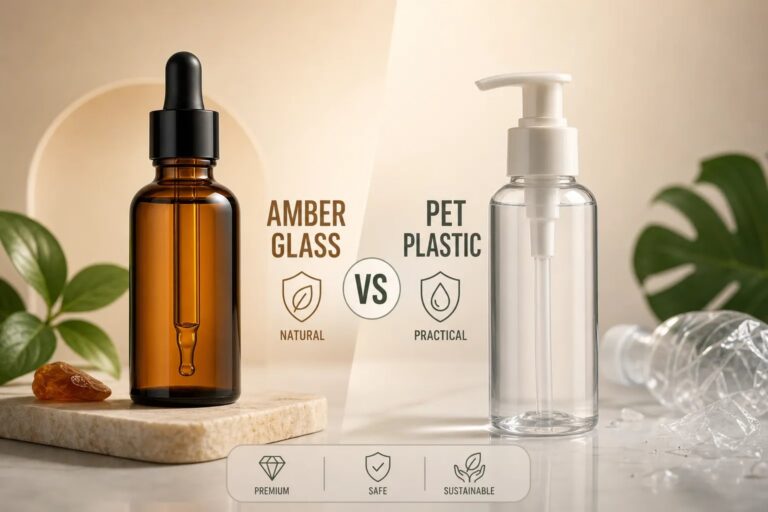
HDPE (high-density polyethylene) is commonly used for opaque packaging. Whether a particular HDPE bottle is suitable depends on its design and the formula it will contain. Ask the supplier for product-specific compatibility and handling data before selecting it.
PET (polyethylene terephthalate) is often chosen when product visibility matters. Compare the supplier’s specifications for the bottle, closure, formula compatibility, and expected storage conditions; do not assume one resin is suitable for every application.
The Durability Debate: HDPE Takes the Lead
HDPE is commonly selected when impact resistance is a priority, but a material name alone does not establish how a specific bottle will perform. Compare supplier test data for the exact design, wall thickness, formulation, and test conditions, including handling and shipping requirements.
- Chemical Resistance: Furthermore, HDPE’s excellent chemical resistance is a major advantage. Many cleaning solutions, industrial chemicals, or personal care products can be corrosive or reactive. HDPE containers are less likely to degrade, leach chemicals into the product, or become embrittled when in contact with a wider spectrum of substances. For instance, For either material, request compatibility data for the specific formula, exposure conditions, and bottle design; do not infer suitability from the resin name alone.
- Temperature Tolerance: HDPE also generally offers a higher service temperature range than PET. This means HDPE bottles are less likely to deform or lose structural integrity in warmer environments, a common concern during transportation or storage in non-climate-controlled warehouses.
Interactive Element:
Quiz: Which plastic is best suited for your spray bottle needs?
- Need excellent clarity for product visibility and are containing carbonated beverages?
- PET
- Require superior impact resistance, chemical stability, and durability for cleaning fluids or industrial chemicals?
- HDPE
- Concerned about potential cracking from drops or rough handling?
- HDPE
Applications and Advantages of HDPE Spray Bottles
Given its durability and chemical resistance, HDPE spray bottles can be a suitable choice for products where impact resistance and chemical compatibility are verified, including:
- Household products: Confirm formula compatibility, closure fit, and leakage performance with the supplier.
- Industrial or agricultural formulas: Request written compatibility and transport-handling data for the exact formulation and bottle specification before use.
- Personal care products: Compare the formula, packaging appearance, dispensing needs, and supplier test evidence before choosing HDPE or PET.
CTA Section:
[ Download Now ] Compare HDPE vs. PET Chemical Resistance Chart
When Might PET Spray Bottles Be Considered?
While HDPE often wins on durability, PET spray bottles do have their place. Their primary advantage is transparency. If your product’s appearance, such as its color or viscosity, is a key selling point and you need consumers to see the product inside, PET’s clarity is invaluable. Think of clear hair gels, colored toners, or certain types of artisanal sprays. Additionally, for products that are not volatile, abrasive, or stored in extreme conditions, PET can be a cost-effective and lighter alternative. The U.S. Environmental Protection Agency (EPA) notes that PET is widely recycled, contributing to its environmental appeal in certain sectors (EPA, 2023). However, for applications prioritizing longevity and resilience against physical stress and chemical exposure, the selection clearly leans towards HDPE.
Conclusion: Prioritizing Performance with HDPE
HDPE and PET spray bottles serve different packaging needs. HDPE is often considered when opacity and impact resistance matter; PET is often considered when product visibility matters. For either material, confirm compatibility with the exact formula, closure fit, and supplier test results before ordering. Browse our spray bottle range and ask for specifications for the intended use.
Fußzeile des Artikels:
Authored by Sarah Jenkins, Materials Science Analyst (8+ years). Specializes in polymer properties and packaging solutions. Contributor to Packaging World Magazine.

 English
 Français
 Deutsch
 Español