The Ultimate Foam Comparison Guide: Choosing the Right Density, ILD, and Material for Any Project
Most people walk into a furniture showroom or browse an upholstery supplier and think all foam is “just sponge.” This misconception is the primary reason why a $2,000 sofa can start sagging within eighteen months, while a well-built piece remains supportive for decades. In the world of material science, foam is a highly engineered polymer structure. Choosing the wrong grade for your project—be it a custom headboard, a boat cushion, or a studio sound treatment—isn’t just a comfort issue; it is a financial one.
Whether you are refurbishing an antique chair, upgrading a mattress, or soundproofing a professional recording space, understanding the chemistry of comfort is the only way to ensure your investment lasts. This guide breaks down the technical specifications that manufacturers often hide in fine print, giving you the tools to specify materials like a pro.
The Verdict (Quick Answer): For high-traffic seating that needs to last, prioritize High Resilience (HR) foam with a density of 2.5 lbs/ft³ or higher. For targeted pressure relief in bedding, Memory Foam remains the industry leader. The golden rule of foam selection: Density equals durability, while ILD (Indentation Load Deflection) equals firmness. Never confuse the two, or you will end up with a firm cushion that loses its shape in a matter of weeks.
1. The Technical Foundation: Density vs. ILD/IFD
To make an informed purchase, you must first separate how a foam feels from how long it will last. These two characteristics are governed by two distinct metrics: Density and ILD.
Understanding Density: The Longevity Metric
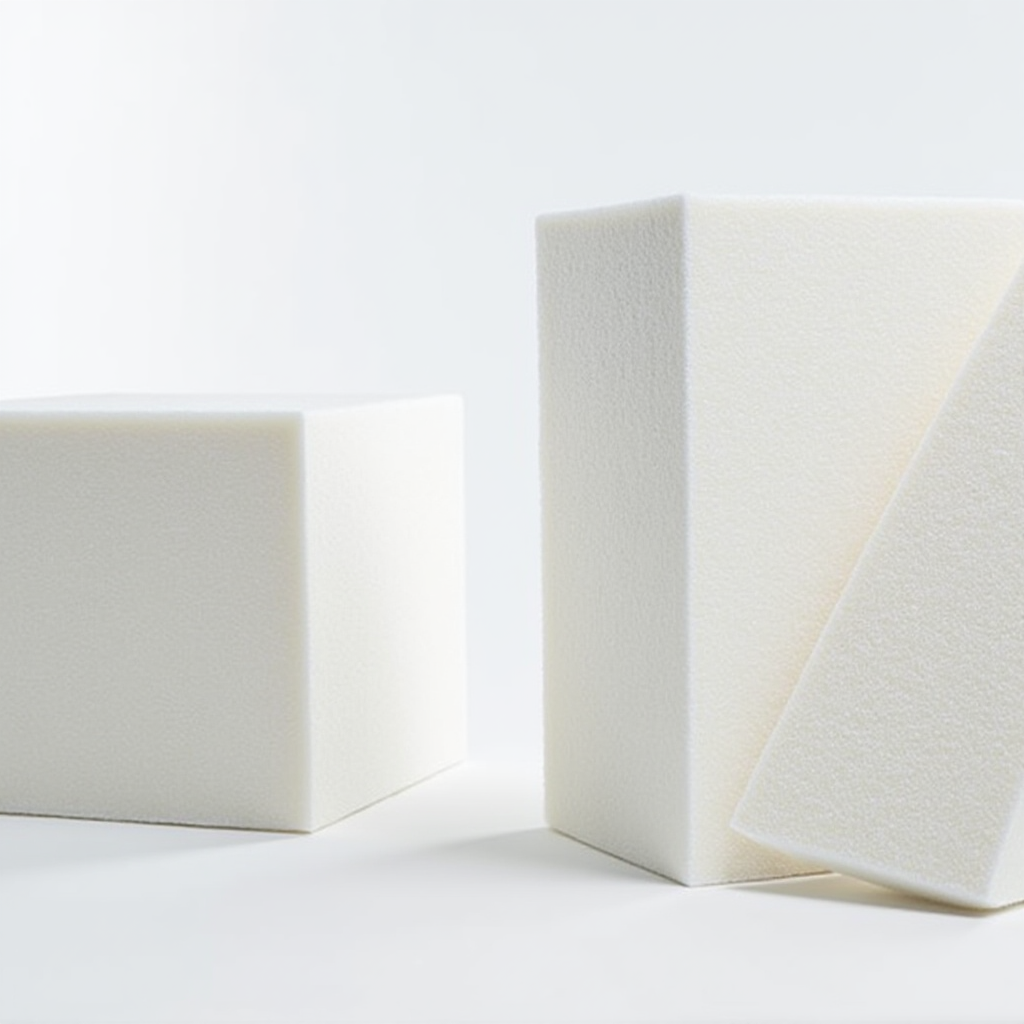
Density is the single most important factor in determining the lifespan of a foam product. It is measured by weighing a 12″ x 12″ x 12″ block of the material. If that cubic foot weighs 2.5 pounds, the foam has a 2.5-lb density.
From a manufacturing standpoint, higher density means there is more actual polymer (the “stuff”) and less air within the cell structure. A high-density foam can withstand thousands of compression cycles without the cell walls breaking down. Conversely, low-density foam (1.2 to 1.5 lbs) is mostly air. While it may feel supportive initially, the thin cell walls quickly rupture under the weight of a human body, leading to the dreaded “bottoming out” effect. When researching the Foam Benefits Explained, you will find that density is the primary driver of cost because it requires more raw chemical material to produce.
Demystifying ILD (Indentation Load Deflection)
If density tells you how long it lasts, ILD (often called IFD) tells you how it feels. This is a measure of firmness. To calculate ILD, a 50-square-inch circular plate is pressed into a 4-inch thick piece of foam. The amount of weight (in pounds) required to compress that foam by 25% (one inch) is the ILD rating.
- Soft Foam: 10–20 lbs ILD (Ideal for back cushions or mattress toppers).
- Medium Foam: 25–35 lbs ILD (The “sweet spot” for most seat cushions).
- Firm Foam: 40–60 lbs ILD (Used for heavy-duty benches or thin pads where you want to avoid hitting the wood base).
The “Expert Insight”: The Firmness Trap
A common mistake is assuming that a “firm” foam is a “good” foam. Manufacturers can create a very firm foam with very low density by using chemical stiffening agents. This foam feels rock-hard in the store but will soften and sag rapidly because the underlying structure is weak. Always demand a high-density foam, even if you prefer a soft feel. You can have a 3.0-lb density foam that is plush and soft (low ILD)—this is the hallmark of luxury furniture.
2. Material Showdown: Polyurethane, HR, and Memory Foam
Not all polymers are created equal. The chemical composition of the foam dictates its performance, breathability, and “push-back” characteristics.
Standard Polyurethane (Polyfoam)
Standard polyfoam is the most common material found in big-box store furniture and packaging. It is budget-friendly and lightweight. However, its cell structure is generally uniform and relatively fragile. It is an excellent choice for items that won’t see daily heavy use, such as decorative headboards, craft projects, or guest room mattresses that are only used a few times a year.
High Resilience (HR) Foam
High Resilience foam is the industry gold standard for high-end upholstery. What sets HR foam apart is its random cell structure. While standard polyfoam has cells that look like a neat grid, HR foam’s cells are varied in size and orientation. This allows the foam to compress in multiple directions simultaneously, providing a “spring-back” effect similar to natural latex. It offers superior support and can easily last 10 to 15 years in a high-traffic living room.
Viscoelastic (Memory Foam)
Originally developed for NASA, memory foam is temperature-sensitive. It reacts to body heat, softening and contouring to the specific shape of the user. This makes it unrivaled for pressure relief, which is why it dominates the medical and bedding industries. The downside? Traditional memory foam is “closed-cell” in nature, which can trap heat. Modern “open-cell” or gel-infused versions have mitigated this, but it still lacks the immediate “bounce” of HR foam, making it poor for seating where you need to get up and down easily.
Latex Foam
Latex is the premium, eco-friendly alternative to petroleum-based foams. It is derived from the sap of rubber trees and is naturally antimicrobial and dust-mite resistant.
- Dunlop Latex: Denser and firmer at the bottom; great for supportive mattress cores.
- Talalay Latex: More consistent and “pillowy” due to an added vacuum and flash-freeze step in manufacturing.
Latex is incredibly durable but is also the most expensive option on the market.
3. Structural Comparison: Open-Cell vs. Closed-Cell Foam
Beyond the chemical makeup, the physical structure of the foam determines its application. This is often described as the “cell morphology.”
Open-Cell Foam
In open-cell foam, the walls of the bubbles are broken, allowing air to move freely through the material. This makes the foam soft, breathable, and flexible. Almost all furniture and bedding foam is open-cell. It is also the preferred choice for acoustic treatments, as the air pathways trap sound waves and convert them into low-grade heat through friction.
Closed-Cell Foam (Polyethylene/EVA)
In closed-cell foam, every bubble is intact and filled with gas. This makes the material waterproof, buoyant, and much more rigid. You will find closed-cell foam in life jackets, yoga mats, and gym floor padding. Because it does not absorb water, it is also used in marine environments as a structural base, though it is rarely comfortable enough for primary seating without a layer of open-cell foam on top.
The Data Point: Compression Modulus
Engineers look at the “Compression Modulus” (or Support Factor). This is the ratio of the 65% ILD to the 25% ILD. A higher ratio means the foam gets firmer the more you sit on it, preventing you from ever feeling the hard frame of the furniture. HR foams typically have a modulus of 2.4 or higher, while standard polyfoams hover around 1.8.
4. The Data Analysis: Foam Comparison Matrix
To help you navigate these technical specs, the following table compares the most common foam types used in residential and commercial projects.
| Foam Type | Typical Density (lbs/ft³) | ILD Range | Lifespan | Best Use Case |
|---|---|---|---|---|
| Standard Poly | 1.2 – 1.8 | 20 – 45 | 1-3 Years | Crafting / Packaging / Guest Beds |
| High Resilience (HR) | 2.5 – 3.0 | 15 – 70 | 10+ Years | Daily Use Seating / Luxury Sofas |
| Lux Foam | 2.2 | 50 | 5-7 Years | High-traffic Benches / Dining Chairs |
| Memory Foam | 3.0 – 5.0 | 10 – 15 | 7-10 Years | Mattress Toppers / Orthopedic Pads |
| Dry Fast | 1.5 – 1.8 | 30 – 40 | 5 Years | Marine / Outdoor / Patio Furniture |
| Latex | 4.0 – 5.5 | 14 – 44 | 15+ Years | Premium Bedding / Eco-conscious projects |
5. Specialty Tiers: When to Go Commercial Grade
Sometimes, standard upholstery foam isn’t enough. Specific environments require engineered solutions to handle moisture, weight, or sound.
Dry Fast (Reticulated) Foam
If you are working on a boat or outdoor patio, standard foam is your enemy. It acts like a giant sponge, holding water and breeding mold. Dry Fast foam undergoes a process called “reticulation,” where a flame or chemical reaction strips away the window-pane membranes of the cells. The result is a skeletal structure that allows water to pour through it as if it were a sieve. When assembling these outdoor cushions, using the right adhesive is critical; consult The Complete Spray Selection Guide to ensure your glue doesn’t clog the pores of the reticulated foam.
Evlon and Lux Foam
These are high-density, high-firmness foams. Evlon is often used in commercial applications like restaurant booths or church pews. Because these seats are used by hundreds of people daily, the foam must have a high density (2.2+) to prevent the material from collapsing, but a high ILD (50+) to