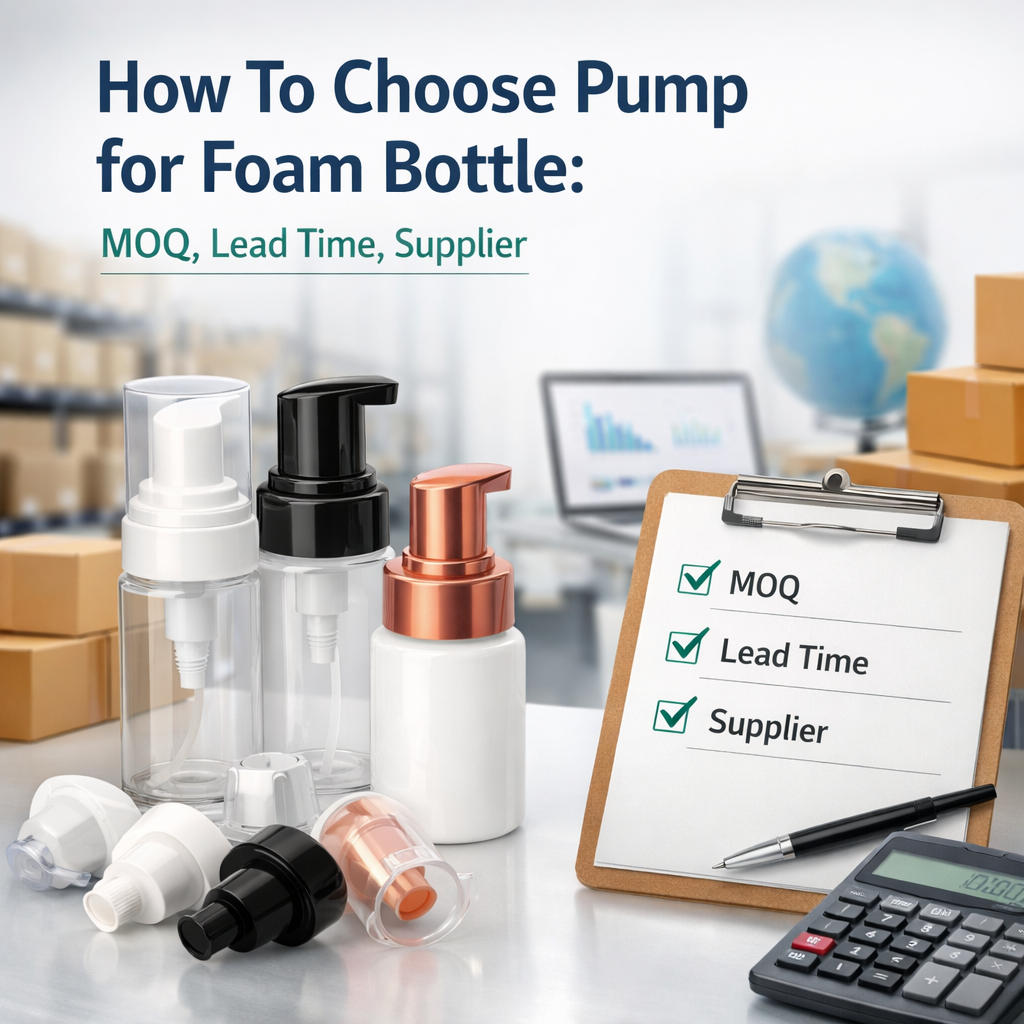
How To Choose Pump for Foam Bottle: MOQ, Lead Time, Supplier
In the high-stakes world of cosmetic and personal care procurement, understanding how to choose pump systems for foam bottles is the difference between a 2% failure rate and a seamless product launch. Recent industry data suggests that approximately 15% of product returns in the foaming soap category are attributed to mechanical pump failure or poor foam density. When selecting a supplier, procurement managers must navigate the tradeoff between immediate stock availability and the 25–40% cost savings associated with high-MOQ custom production runs.
To optimize your supply chain, you must evaluate the technical specifications of the pump mesh against your liquid viscosity. A pump with a 200-mesh screen provides a “luxurious” foam feel but may clog if the formula contains particulate matter or high oil concentrations. Conversely, a 100-mesh screen offers higher reliability for thicker liquids but produces a “watery” foam that can diminish brand perception. This guide provides a rigorous data-driven framework for selecting the right foam bottle components, managing lead times, and vetting suppliers.
구매자가 폼병 솔루션을 선정하는 방법
Shortlisting a foam bottle supplier requires moving beyond aesthetic appeal to technical compatibility. The primary decision factor is the “Air-to-Liquid Ratio,” which typically ranges from 10:1 to 15:1 in high-quality dispensers. Before requesting quotes, buyers must confirm the chemical compatibility of their formulation with PET (Polyethylene Terephthalate) or HDPE (High-Density Polyethylene) materials.
Critical Technical Validations
- 점도 호환성: Standard foam pumps are calibrated for water-like viscosities (under 100 cps). If your formula exceeds this, the pump may fail to prime or the spring may lose tension within 50 actuations.
- 넥 마감 정밀도: A 28/410 or 30/410 neck must have a tolerance within ±0.05mm to prevent “sneezing” (air leakage) during compression.
- Dip Tube Length: Ensure the dip tube is “V-cut” or “Side-cut” and extends to within 2mm of the bottle base to minimize a 3-5% product waste margin.
Buyers should confirm if the supplier utilizes external or internal springs. External springs are preferred for high-end formulations because the liquid never touches the metal, eliminating the 1.5% risk of oxidation or discoloration of the product. When you evaluate how to choose pump options, prioritize suppliers who provide a “Compatibility Report” or offer a “Sample Fit Test” where they test your specific liquid in their lab before finalizing the MOQ.
전문가 팁: Always request a “priming count” specification. A high-quality foam pump should achieve full foam delivery within 3 to 5 strokes. Anything exceeding 7 strokes indicates a poor seal or inefficient air chamber design.
폼 병의 MOQ, 리드 타임 및 샘플 체크 포인트
The procurement cycle for foam bottles is heavily influenced by customization. Understanding the data behind these timelines prevents stockouts and ensures a 100% on-time launch rate.
The MOQ-Cost Correlation
In the current market, MOQ (Minimum Order Quantity) tiers significantly impact the unit price. For a standard 60ml PET foam bottle, the price variance is often as follows:
| Order Quantity (Units) | Lead Time (Business Days) | Estimated Unit Price (USD) | Customization Level |
|---|---|---|---|
| 500 – 1,000 | 3 – 7 Days | $0.45 – $0.65 | Stock Colors Only |
| 3,000 – 5,000 | 15 – 20 Days | $0.30 – $0.40 | Silk Screen / Labeling |
| 10,000+ | 30 – 45 Days | $0.18 – $0.25 | Custom Color / Embossing |
Lead Time Variables
Lead times are not static. For example, opting for a 30ml, 60ml, 100ml 흰색·분홍색 펌프, 흰색 뚜껑 플라스틱 폼 병 in a custom Pantone shade adds an average of 10 days to the production cycle for color matching and masterbatch preparation.
Sourcing Red Flags:
1. **Unusually Low MOQ with High Customization:** This often indicates “overstock” or “B-grade” materials that may have a failure rate exceeding 5%.
2. **Vague Sample Policies:** Professional suppliers should provide 3-5 functional samples within 7 days. If a supplier refuses samples, they likely lack confidence in their pump’s mechanical longevity.
3. **Missing Certifications:** Ensure the supplier provides SGS or FDA material safety data sheets (MSDS), especially if the bottle is intended for the US or EU markets.
Specification and sourcing trade-offs for how to choose pump
When deciding how to choose pump configurations, buyers face a triangle of tradeoffs: Durability, Cost, and User Experience. You cannot maximize all three without significant investment.
Material and Closure Trade-offs
- PET vs. HDPE: PET offers 90% clarity (ideal for colored liquids) but has lower chemical resistance than HDPE. For formulas with high essential oil content (>2%), PET may experience “crazing” or micro-cracking over a 6-month shelf life.
- Overcaps (Lids): A full overcap prevents accidental discharge during shipping (reducing transit damage by 12%), but it increases the total package height and shipping volume, raising logistics costs by approximately 5-8%.
- 메시 밀도: As mentioned, a finer mesh creates a thicker foam but increases the “operating force” required by the user. A 150-mesh screen is the industry standard for balancing these needs.
Procurement Decision Matrix
| 기능 | High-End Choice | Budget Choice | Impact on Buyer |
|---|---|---|---|
| Spring Type | External (SUS 304) | Internal (SUS 302) | External prevents product contamination. |
| Bottle Weight | 25g (Heavy Wall) | 18g (Standard) | Heavier wall feels “premium” and resists denting. |
| Pump Output | 0.8ml per stroke | 0.4ml per stroke | Higher output improves user satisfaction in showers. |
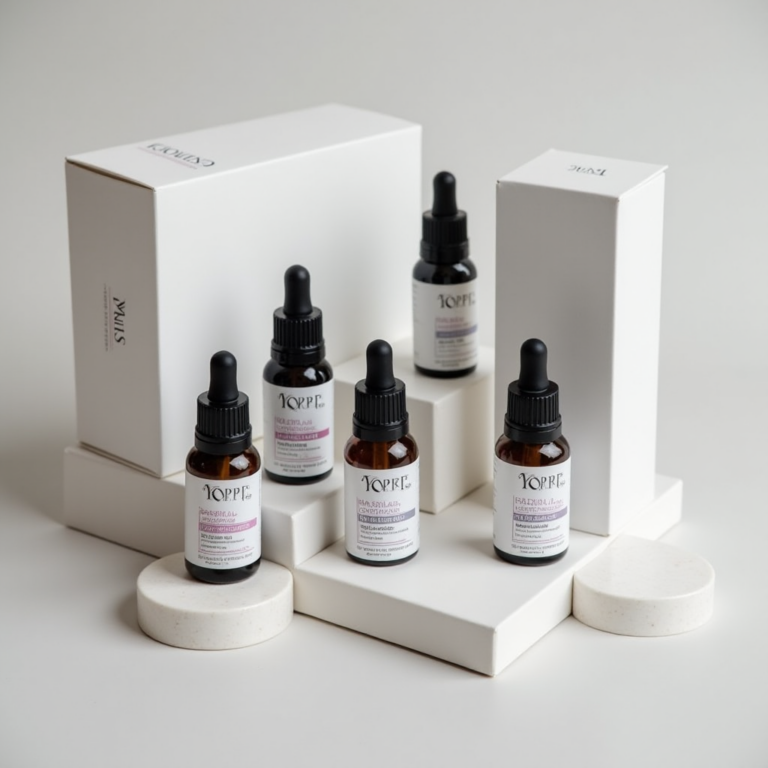
Before proceeding, check out the 폼 보틀 플라스틱 선택 방법 가이드 for a deeper dive into polymer selection. If your project requires smaller volumes, the dropper bottle 0.5oz(15ml) range might be a more suitable alternative for concentrated serums that don’t require aeration.
매핑된 제품 예시 및 적합성 시나리오
To ground these technical specs in reality, let’s look at three common procurement scenarios using real-world catalog examples.
Scenario A: The Professional Salon Brand
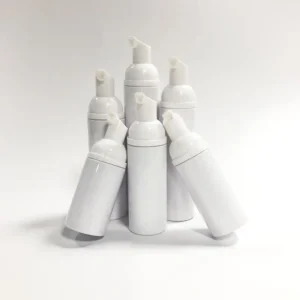
제품: 30ml, 60ml, 100ml 흰색 펌프 및 흰색 뚜껑이 달린 플라스틱 폼 병
적합한 이유: The clinical white-on-white aesthetic signals “purity” and “medical grade.” This is the go-to choice for lash cleansers or professional hair treatments. The 100ml size is ideal for salon back-bar use, while the 30ml serves as a high-margin retail “travel size.”
트레이드 오프: White plastic shows scuffs more easily during automated filling; ensure your filler uses soft-touch grippers.
Scenario B: The Men’s Grooming / Charcoal Line
제품: 30ml, 60ml, 100ml 흰색/검정색 펌프, 흰색 뚜껑 플라스틱 폼 병
적합한 이유: The black pump provides a sharp contrast, often used for “active” or “charcoal-based” facial cleansers. The black pigment in the pump housing is more resistant to UV degradation, protecting the internal mechanical components if the product is stored in bright retail environments.
트레이드 오프: Black pumps often have a slightly higher MOQ (usually 5,000+) because the masterbatch changeover in the injection molder is more labor-intensive.
Scenario C: The Boutique Skincare / Gift Set
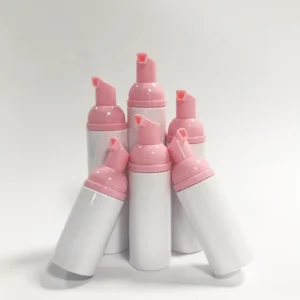
제품: 30ml, 60ml, 100ml 흰색·분홍색 펌프, 흰색 뚜껑 플라스틱 폼 병
적합한 이유: Specifically designed for the “Gen-Z” or “Gift” market. The pink accents reduce the need for expensive full-bottle sleeve labeling, as the component itself provides the brand color.
트레이드 오프: Color consistency across batches can vary by 2-3% Delta-E. Always demand a “limit sample” showing the acceptable light/dark range for the pink plastic.
For brands looking to bridge the gap between foam and liquid applications, reviewing the 화장품용 30ml 폼 보틀 가이드 provides additional insights into how small-format foaming affects consumer usage rates.
자주 묻는 질문
대상 애플리케이션과 충전 프로세스에 적합한 폼 보틀 옵션은 무엇인가요?
For high-speed automated filling lines, PET foam bottles with 28/410 neck finishes are the industry standard due to their structural rigidity. If your application involves “waterless” cleansers, ensure the pump has a “non-vented” design to prevent evaporation. Always choose a 100ml or larger capacity for hand soaps to reduce the refill frequency, whereas 30ml-60ml is preferred for facial care to maintain product freshness.
폼 보틀 소싱에는 어떤 MOQ, 리드 타임 및 사용자 지정 제약 조건이 적용되나요?
Standard MOQ for stock white or clear foam bottles is typically 1,000 units with a 7-day lead time. Custom colors or silk-screen printing usually require a minimum of 5,000 to 10,000 units and extend lead times to 30-45 days. The main constraint for customization is the mold cooling time and the color-matching process, which can take up to 10 days before production begins.
Which material, capacity, and closure combinations are the best fit for foam bottle?
The most reliable combination for the majority of cosmetic applications is a PET bottle (for clarity and strength) paired with a Polypropylene (PP) foam pump and an overcap. For 100ml capacities, a 0.8ml output pump is recommended. For 30ml travel sizes, a 0.4ml output pump is better to prevent product waste and over-saturation of the skin.
When should I browse the foam bottle category as the next step?
You should browse the foam bottle category once you have determined your liquid’s viscosity and your target retail price point. The category page allows you to compare 11+ different mechanical configurations and aesthetic styles side-by-side to find the best fit for your brand’s specific procurement needs.
Next step for buyers
Choosing the right pump is a technical challenge that directly impacts your brand’s bottom line. To ensure you are selecting a component that passes rigorous QC standards—including the 24-hour leak test and the 500-actuation fatigue test—your next step should be a comprehensive comparison of available formats.
 English (United States)
  Spanish
  French
  German
  English (UK)
  Japanese
  Korean
  Russian
  Arabic