Dropper Bottle 3.4oz(100ml): MOQ, Lead Time, Buyer Checks
The global cosmetic packaging market is experiencing a significant shift toward the 100ml (3.4oz) format, which currently accounts for approximately 28% of the mid-size container segment. This specific volume represents a critical intersection of consumer convenience and manufacturing efficiency. For brands, the benefits of 100ml white pump systems extend beyond simple aesthetics; they involve a calculated trade-off between portability—specifically adhering to the TSA’s 3-1-1 liquids rule—and the shelf presence required for premium skincare and essential oil products. Choosing the right 3.4oz dropper or pump bottle requires a rigorous analysis of material durability versus cost, as well as an understanding of how pump mechanics affect formula stability over a 6-to-12-month shelf life.
The Strategic Value of 100ml (3.4oz) Dropper Bottles
In the hierarchy of packaging sizes, the 100ml (3.4oz) bottle is often referred to as the “professional standard.” Data from retail performance studies suggests that 100ml units offer a 15-20% higher perceived value to consumers compared to 50ml units, while only increasing manufacturing costs by an average of 8-12%. This makes the 3.4oz size a high-margin choice for manufacturers of facial serums, hair oils, and body treatments.
Versatility of the 3.4oz Size for Skincare and Essential Oils
The 3.4oz capacity is uniquely suited for high-viscosity liquids that require controlled dispensing. While essential oils often use 5ml to 30ml containers, “carrier oil” blends and professional-grade serums frequently move into the 100ml range. The surface area of a 100ml bottle provides ample space for regulatory labeling, including INCI lists and usage instructions, which are often crowded or unreadable on smaller 1oz (30ml) alternatives.
Compliance with TSA Travel Limits
One of the strongest market drivers for the 100ml format is the International Civil Aviation Organization (ICAO) standards, adopted by the TSA. The 100ml limit is the maximum allowable volume for carry-on liquids. By utilizing a 3.4oz bottle, brands can market their products as “travel-ready” without sacrificing the volume required for a 30-day supply of product. Statistics indicate that “travel-friendly” labeling can increase click-through rates on e-commerce platforms by up to 14%.
Market Demand for Mid-Sized Professional Packaging
In the B2B sector, the demand for 100ml containers has seen a 6.4% CAGR over the last three years. This is largely due to the rise of “clean beauty” brands that require larger volumes for body-focused applications but want to avoid the bulk of 250ml or 500ml salon-sized containers. The 100ml size fits perfectly in standard retail shelving heights (typically 150mm to 200mm), ensuring maximum visibility.
Key Benefits of the 100ml White Pump Dispenser
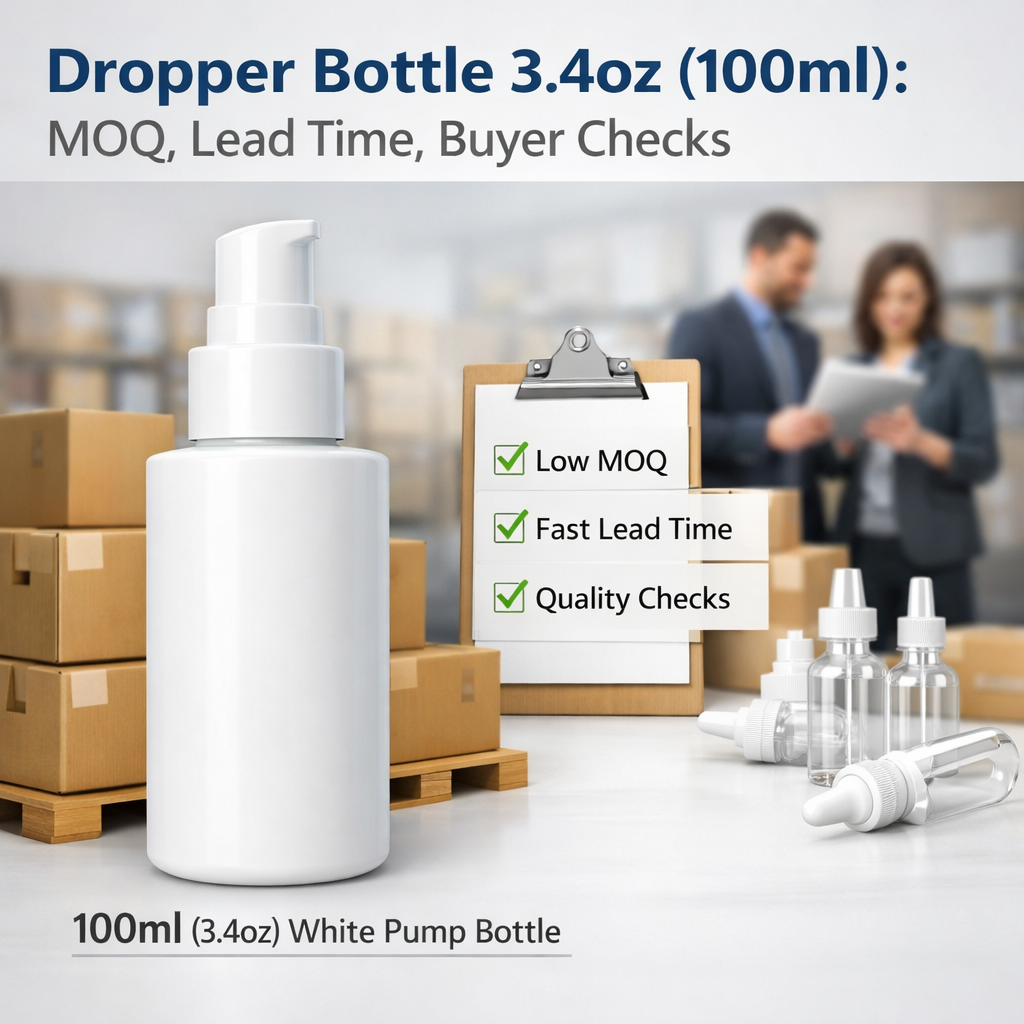
When selecting a closure for a 3.4oz container, the benefits of 100ml white pump mechanisms are often superior to standard droppers for specific formulations. A white pump offers a clinical, clean aesthetic that resonates with dermatological and medical-grade brands.
- Precision Dosing and Waste Reduction: Standard 24/410 white pumps are engineered to dispense between 0.20ml and 0.50ml per stroke. This precision reduces product waste by an estimated 22% compared to open-pour bottles, ensuring the consumer gets the exact dosage intended by the formulator.
- Hygienic Application: Unlike droppers, which expose the internal product to ambient air and potential skin contact every time they are used, a pump system is a closed-loop environment. Research shows that airless or high-quality dip-tube pumps can reduce formula oxidation by up to 40%, extending the efficacy of active ingredients like Vitamin C or Retinol.
- Aesthetic Consistency: White pumps provide a “blank canvas” for branding. They offer a neutral contrast to colored PET or glass bottles, allowing the liquid’s color or the label’s design to take center stage. Furthermore, white plastic components are generally more cost-effective and have shorter lead times than custom-colored or metal-shrouded pumps.
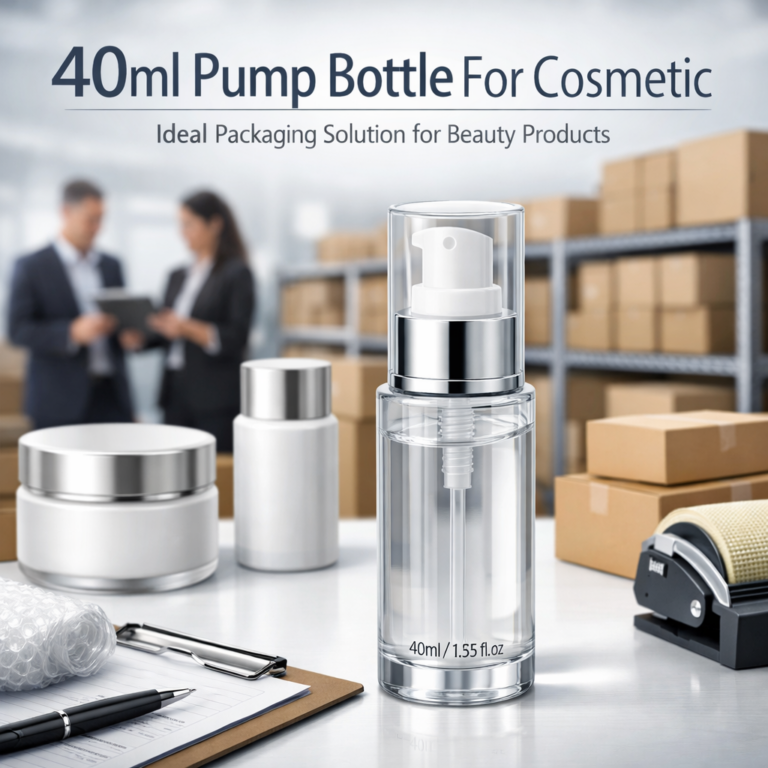
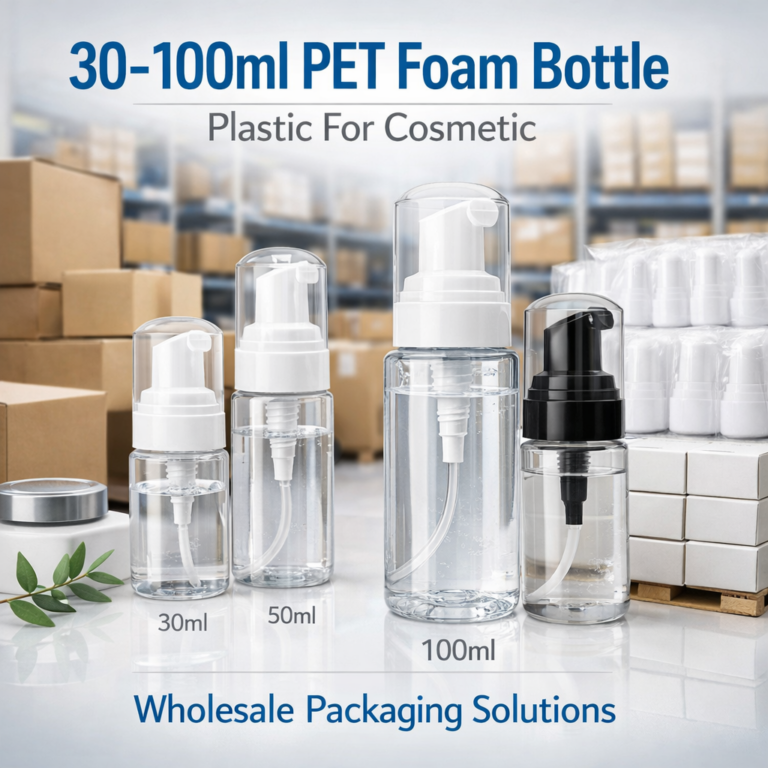
For brands looking for specific examples of these benefits in action, the 30ml 60ml 100ml 흰색 펌프 흰색 뚜껑 플라스틱 거품 병 빈 샴푸 용기 demonstrates how a white pump assembly can be integrated into a PET foam bottle system for consistent, hygienic delivery. Similarly, for those needing a more compact option, the 화장품용 40ml 펌프 보틀 guide provides insights into how these benefits scale down to smaller volumes.
Understanding MOQ (Minimum Order Quantity) for 3.4oz Bottles
The procurement of 100ml bottles involves a strategic balance between inventory holding costs and unit price optimization. MOQs are not arbitrary; they are dictated by the “purge” requirements of injection molding machines and the setup time for automated assembly lines.
Typical MOQ Ranges: Stock vs. Custom
For a standard 100ml PET bottle with a white pump, MOQs generally fall into three tiers:
| Order Type | Typical MOQ (Units) | Customization Level | Price Impact |
|---|---|---|---|
| Stock Items | 1,000 – 3,000 | None (Standard White/Clear) | Baseline |
| Custom Color (Bottle) | 5,000 – 10,000 | PMS Color Match | +15-25% |
| Custom Pump/Decoration | 10,000 – 20,000 | Silk Screen, Hot Stamping | +30-50% |
How MOQ Affects Unit Pricing
Economies of scale are aggressive in plastic manufacturing. Increasing an order from 3,000 units to 10,000 units typically results in a unit cost reduction of 12-18%. This is due to the amortization of machine setup costs (which can range from $500 to $2,000 per run) over a larger number of units. Brands should also consider the benefits of 100ml white pump availability; because white is a standard resin color, suppliers often allow lower MOQs for white components than for custom “Rose Gold” or “Matte Black” finishes.
Pro Tip: If your current volume is below 5,000 units, stick to “In-Stock” colors like clear, white, or amber. Use high-quality labels to differentiate your brand rather than custom bottle colors, which trigger higher MOQs.
Lead Time Expectations and Production Cycles
In the current global supply chain, lead times for 100ml packaging can fluctuate based on resin availability and shipping lane congestion. Buyers should plan for a minimum 60-day window from “Deposit Paid” to “Product in Warehouse.”
Standard Manufacturing Timelines
A typical production cycle for a 100ml dropper or pump bottle follows this schedule:
- Sample Approval (7-10 days): Confirming the fit between the pump and bottle.
- Raw Material Sourcing (5-10 days): Procuring PET, PP, or Glass resins.
- Injection/Blow Molding (15-25 days): The actual manufacturing of the bottle bodies.
- Assembly and QC (5-7 days): Fitting pumps, dip tubes, and conducting leak tests.
Factors That Delay Production
Customization is the primary driver of delays. A custom mold for a unique bottle shape can add 30-45 days to the initial lead time. Color matching (PMS matching) can add 7-10 days for the “strike-off” sample process. For buyers who cannot wait for long production cycles, browsing the dropper bottle 3.4oz(100ml) tag page allows for the identification of items that are frequently kept in semi-finished stock, significantly reducing the wait time.
Essential Buyer Checks: Quality Assurance Checklist
Before finalizing a bulk order for 100ml units, procurement officers must conduct a “Spec Tradeoff Lab” evaluation. This involves testing the physical limits of the packaging to prevent mass-market failures.
1. Material Compatibility Testing
Not all PET is created equal. Certain essential oils or high-alcohol formulations can cause “stress cracking” in PET bottles.
Test Method: Fill the bottle with your formula and store it at 45°C (113°F) for 4 weeks. If the bottle shows clouding, softening, or cracking, you must switch to Glass or a specialized PETG resin.
2. Vacuum Leak Testing
A pump that leaks during air travel is a brand killer.
Pass/Fail Condition: Place filled bottles in a vacuum chamber at -0.05 MPa for 5 minutes. If any liquid escapes the pump housing or the neck thread, the seal is insufficient. Ensure the benefits of 100ml white pump include a high-quality gasket (usually PE or Silicone).
3. Pump Priming and Dosage Consistency
How many strokes does it take to get the first drop?
Standard: A high-quality pump should prime in 3 to 7 strokes.
Check: Measure the weight of 10 consecutive doses. The variance should be less than ±5%. For example, if the pump is rated for 0.25ml, every stroke should fall between 0.237ml and 0.262ml.
4. Dip Tube Length
In a 100ml bottle, the dip tube must be precisely cut. If it is too short, 5-10ml of product remains “trapped” and unusable. If it is too long, it curves excessively, potentially blocking the intake or causing the pump to sputter.
Check: The dip tube should just touch the bottom corner of the bottle with a slight “V” or “U” bend.
For those considering different closure styles, the 화장품용 PET 폼 병 30-100ml 플라스틱 guide offers a comparison of how foam pumps differ from standard treatment pumps in these quality checks.
Comparing 100ml Options: A Decision Matrix
When navigating the 6+ items available in the dropper bottle 3.4oz(100ml) category, use the following matrix to narrow your search:
| 기능 | PET Foam Bottle (100ml) | Glass Dropper (100ml) | PET Treatment Pump (100ml) |
|---|---|---|---|
| Best For | Cleansers, Hand Sanitizer | Essential Oils, Serums | Lotions, Viscous Gels |
| 내구성 | High (Shatterproof) | Low (Fragile) | High (Shatterproof) |
| Oxygen Barrier | Moderate | 높음 | Moderate to High |
| Weight (Empty) | ~25g | ~120g | ~22g |
| Recyclability | High (Code 1) | High (Infinite) | High (Code 1) |
Examples of these variations include the 30ml 60ml 100ML White black pump white lid Plastic Foam Bottle, which offers a higher contrast aesthetic, and the 30ml 60ml 100ML White pink pump white lid Plastic Foam Bottle, which is often selected for “soft-brand” or feminine care lines.
Conclusion: Sourcing Reliable 100ml Packaging
Sourcing a 100ml (3.4oz) container is a strategic decision that impacts everything from shipping costs to user experience. The benefits of 100ml white pump systems—namely hygiene, precision, and cost-efficiency—make them the leading choice for modern skincare brands. However, success relies on verifying MOQs that fit your growth stage, planning for 45-60 day lead times, and conducting rigorous vacuum and compatibility tests.
By prioritizing technical specifications over generic aesthetics, you ensure that your product not only looks professional on the shelf but performs flawlessly in the consumer’s hand. For more detailed technical comparisons, refer to the 100ml 화이트 펌프 비교: MOQ, 리드 타임, 구매자 확인 guide.
Ready to Shortlist Your 100ml Packaging?
The fastest way to find the exact material and closure combination for your project is to browse our curated tag pages. These pages allow you to filter by specific technical attributes:
- Primary Recommendation: Explore the Dropper Bottle 3.4oz(100ml) Archive. This is the best starting point to compare MOQs and specs for mid-sized professional containers.
- For Foaming Formulas: If your product requires a specialized aeration pump, visit the Foam Bottle Category to see PET and HDPE options.
Contact our sales team today for a custom quotation or to request a sample kit for compatibility testing.
자주 묻는 질문
Which dropper bottle 3.4oz(100ml) options fit the target application and filling process?
For low-viscosity liquids like essential oils, glass dropper bottles are ideal due to their chemical inertness. For thicker serums or cleansers, PET bottles with treatment pumps (like the 100ml white pump) are preferred to prevent clogging and ensure consistent dosing. If your filling line is automated, ensure the bottle neck finish (e.g., 24/410) matches your capping equipment torque settings.
What MOQ, lead time, and customization constraints apply to dropper bottle 3.4oz(100ml) sourcing?
Standard MOQs for stock 100ml bottles typically start at 3,000 units, while custom-colored resins require 10,000+ units. Lead times average 25-35 days for production plus shipping. Customization like silk-screening or hot-stamping will extend lead times by approximately 10-14 days and may increase the MOQ to 10,000 units to account for machine setup waste.
When should I choose a 100ml white pump over a standard dropper?
Choose a white pump when your formula is sensitive to air (oxidation), when you need a specific dosage per use (e.g., 0.25ml), or when the product is used in a high-moisture environment like a bathroom where a closed-system pump is more hygienic than an open dropper. You can browse specific pump-fitted options at the dropper bottle 3.4oz(100ml) page.
Are 100ml bottles always TSA-compliant?
Yes, 100ml is exactly the upper limit (equivalent to 3.38 fluid ounces) allowed by the TSA and international aviation authorities for carry-on liquids. This makes the 3.4oz/100ml bottle the most popular size for premium travel kits and “on-the-go” skincare lines.
How do I verify the quality of a 100ml pump before bulk ordering?
Perform a “priming test” (should take <7 strokes), a "leak test" (vacuum chamber at -0.05MPa), and a "compatibility test" (4 weeks at 45°C with your formula). These checks ensure the pump spring (SUS304/316) and the bottle material can withstand the chemical properties of your product and the physical stresses of shipping.