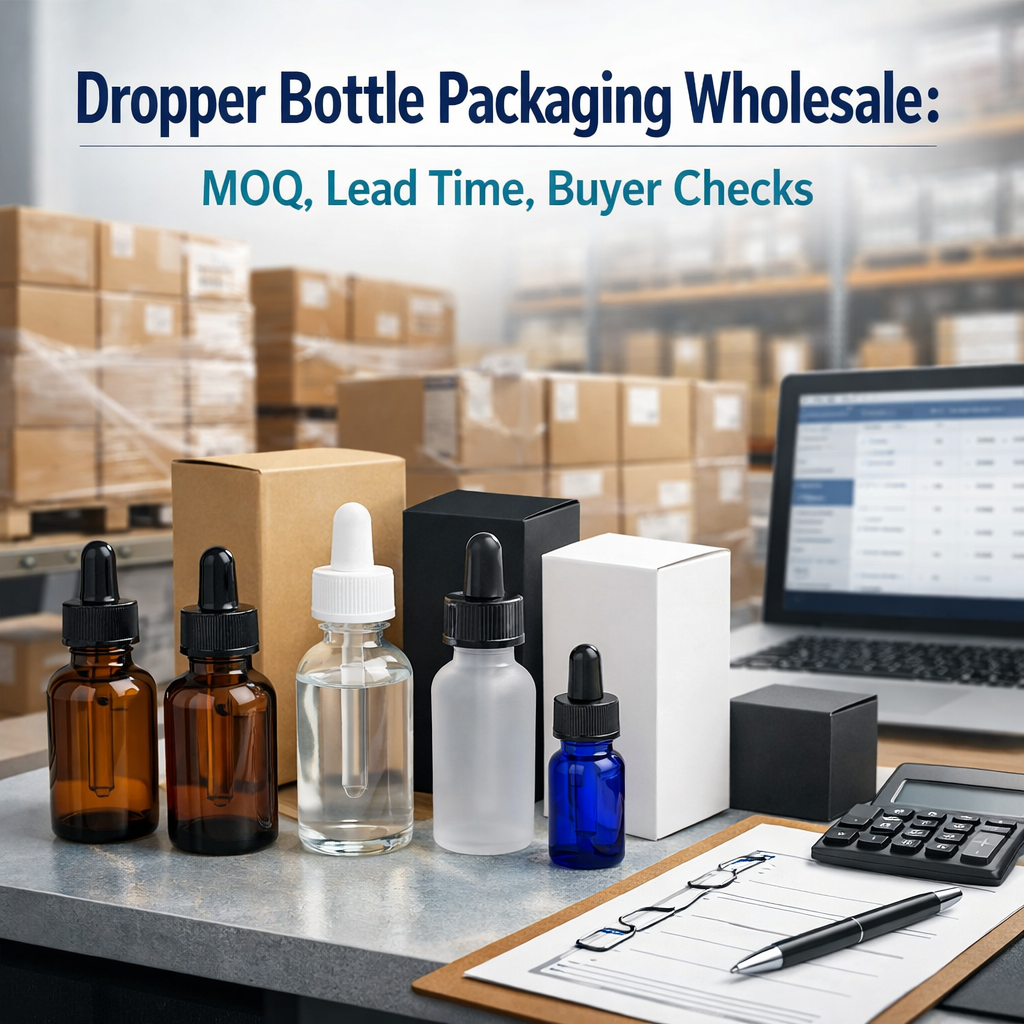
Dropper Bottle Packaging Wholesale: MOQ, Lead Time, Buyer Checks
Procuring dropper bottle packaging wholesale is a high-stakes operational decision where a 0.5mm variance in neck finish or a 15% delay in lead time can derail a product launch and inflate costs by up to 25%. In the current B2B landscape, 92% of packaging failures are attributed to incompatible closure-to-bottle seals rather than material defects. To mitigate these risks, buyers must move beyond price-per-unit metrics and adopt a diagnostic approach to supplier validation, focusing on measurable thresholds and compliance data.
The Diagnostic Verdict
Successful sourcing hinges on three critical variables: Material Compatibility, Precision Tolerance, and Logistical Scalability. Before requesting a quote, buyers must verify that the supplier’s Quality Management System (QMS) adheres to an Acceptable Quality Level (AQL) of 1.5 for major defects and 2.5 for minor defects. Failure to validate these metrics often leads to the top three failure triggers in the industry:
- Neck Finish Mismatch: Using a GL18 closure on a non-standard 18mm neck, resulting in a 30% increase in leakage risk.
- UV Degradation: Sourcing amber glass with less than 99% light-blocking efficiency (300-500nm range) for light-sensitive essential oils.
- Lead Time Volatility: Overlooking the 14-21 day “decoration buffer” required for silk-screening or hot-stamping on custom orders.
How buyers shortlist foam bottle solutions
When searching for dropper bottle packaging wholesale, many buyers simultaneously evaluate the 泡ボトル category, as these formats often share similar liquid-dispensing requirements for cosmetics and pharmaceuticals. Shortlisting a foam bottle supplier requires a technical audit of the pump mechanism and the formulation’s viscosity.
Direct Buyer Answer: The most effective foam bottle options for wholesale procurement are those that utilize a 0.4cc to 0.8cc output pump paired with a PET or HDPE body. Buyers must confirm the “spring-to-liquid” contact; for acidic formulations, an external spring design is mandatory to prevent corrosion. Before requesting quotes, confirm the “dip tube length” precisely—a 2mm error can lead to 5% product waste at the bottom of the bottle.
Shortlist Verification Checklist
- Filling Process Compatibility: Does the bottle neck diameter support high-speed rotary fillers? (Standard ranges are 20mm, 24mm, and 42mm for foamers).
- Branding Constraints: Is the surface tension (dyne level) of the plastic treated for ink adhesion? (Minimum 38 dynes/cm required for most UV inks).
- Compliance: Does the supplier provide USP <661> or EU 10/2011 certifications for plastic materials?
What to do next: Audit your formulation’s pH level. If the pH is below 4.5 or above 8.5, request a chemical compatibility test report from the supplier before committing to a bulk 泡ボトル order.
MOQ, lead time, and sample checkpoints for foam bottle
The divide between stock availability and custom manufacturing is the primary driver of procurement delays. In the wholesale market, lead times are not just about production; they are about the synchronization of components (bottles, pumps, and over-caps).
Diagnostic Table: Sourcing Benchmarks
| Parameter | Stock Orders (Ready-to-Ship) | Custom Production (OEM/ODM) | Risk Impact |
|---|---|---|---|
| Typical MOQ | 1 Case (e.g., 750pcs) | 5,000 – 10,000 units | Inventory carrying costs vs. Unit Price |
| Lead Time | 3 – 7 Business Days | 35 – 55 Business Days | Market entry speed |
| Sample Policy | Paid shipping, Free units | Pre-production proof ($150-$500) | Validation of decoration quality |
| Customization | Labeling only | Color matching, Silk-screen | Brand differentiation |
Sourcing Red Flags
- Vague Lead Times: If a supplier quotes “approx. 30 days” without a production schedule, they are likely a middleman, not a manufacturer.
- Hidden Tooling Fees: For custom shapes in the foam bottle category, ensure the mold ownership and maintenance clauses are defined in the contract.
- Sample Discrepancy: If a sample arrives without a “Batch Number,” there is a 40% higher chance that the mass production run will deviate from the sample’s specs.
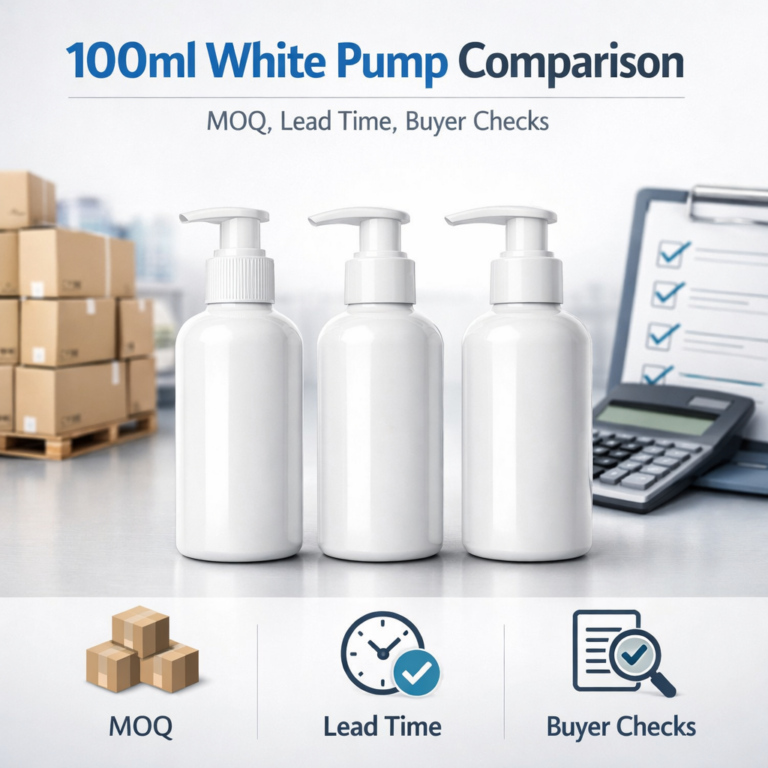
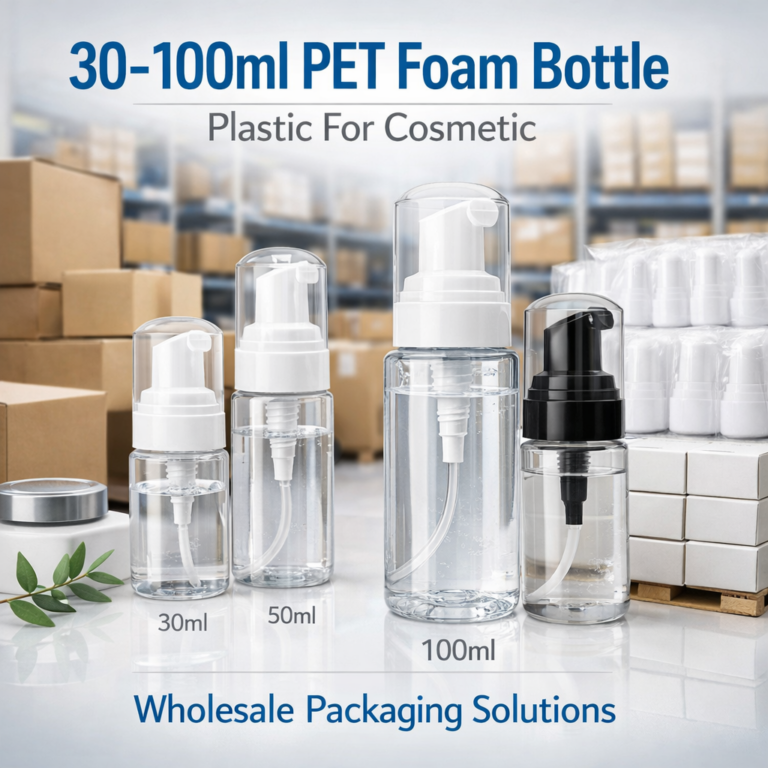
What to do next: Reference the 30ml PET 30ml 60ml 100ml White Pump White Lid Plastic Foam Bottle : MOQ and Lead Time and Buyer Benchmarks guide to calibrate your expectations for plastic-based dispensing systems.
Specification and sourcing trade-offs for dropper bottle packaging wholesale
In dropper bottle packaging wholesale, every specification choice involves a trade-off between cost, protection, and consumer experience. For instance, choosing glass over plastic increases perceived value but raises shipping costs by 18-22% due to weight and breakage protection requirements.
Comparison: Material and Closure Trade-offs
- Amber Glass vs. Clear Glass: Amber glass provides 99% UV protection, essential for essential oils. Clear glass offers 0% UV protection but allows for high-clarity product visibility. Trade-off: Shelf life vs. Aesthetic appeal.
- PP Droppers vs. Nitrile Bulbs: PP (Polypropylene) is chemically inert for most oils, while Nitrile offers better suction for high-viscosity liquids. Trade-off: Chemical stability vs. Dispensing efficiency.
- Child-Resistant (CRC) vs. Standard Caps: CRC caps are mandatory for many CBD and pharmaceutical applications but add $0.03-$0.07 to the unit cost. Trade-off: Compliance vs. Margin.
Shortlist Framework: The 5-Point Spec Check
- Vertical Load Strength: Can the bottle withstand the pressure of an automated capping machine? (Minimum 15kgf required).
- Closure Torque: What is the removal torque after 24 hours? (Should stay within 0.8 – 1.2 Nm for 18mm necks).
- Brimful Capacity: Is there a 10% headspace to allow for thermal expansion of the liquid?
- Orifice Reducer Fit: Does the dropper insert require a “snap-fit” or “friction-fit”?
- Decoration Durability: Pass the “Tape Test” (ASTM D3359) to ensure the logo doesn’t peel under friction.
What to do next: For technical data on material durability, consult the データ主導の洞察:ホールセール向けhdpe guide to understand how different resins perform under stress.
Mapped product examples and fit scenarios
To ground these technical requirements, consider these real-world catalog examples and their specific wholesale applications. These items represent the core of a dropper bottle packaging wholesale strategy.
Example 1: The Precision Sampler
Product: Amber Glass Dropper Bottles | Portable & Refillable Travel Accessories (5ml, PP, Dropper)
Why it fits: This is the industry standard for “Gift with Purchase” (GWP) or lab sampling. The 5ml capacity is optimized for high-value concentrates where the cost-per-ml is high. The use of PP in the dropper assembly ensures compatibility with volatile essential oils that might degrade cheaper elastomers.
Example 2: The High-Volume Retailer
Product: 750pcs/case 10ml Blue Glass Essential Oil Roller Bottles
Why it fits: Logistics efficiency is the highlight here. With 750 pieces per case, this SKU is designed for rapid palletization and lower shipping costs per unit. The blue glass provides aesthetic differentiation from standard amber while maintaining significant light filtration. It is ideal for topical applications where a dropper is less efficient than a roller ball.
Example 3: The Fragrance Tester
Product: Small Spray glass Bottles Plastic Sprayers Black Head (3ml, Glass, Spray)
Why it fits: While not a dropper, this 3ml spray format is a mandatory cross-sell for buyers in the perfume glass bottles wholesale segment. It answers the need for micro-dosing and scent testing, utilizing the same glass chemistry as high-end dropper bottles.
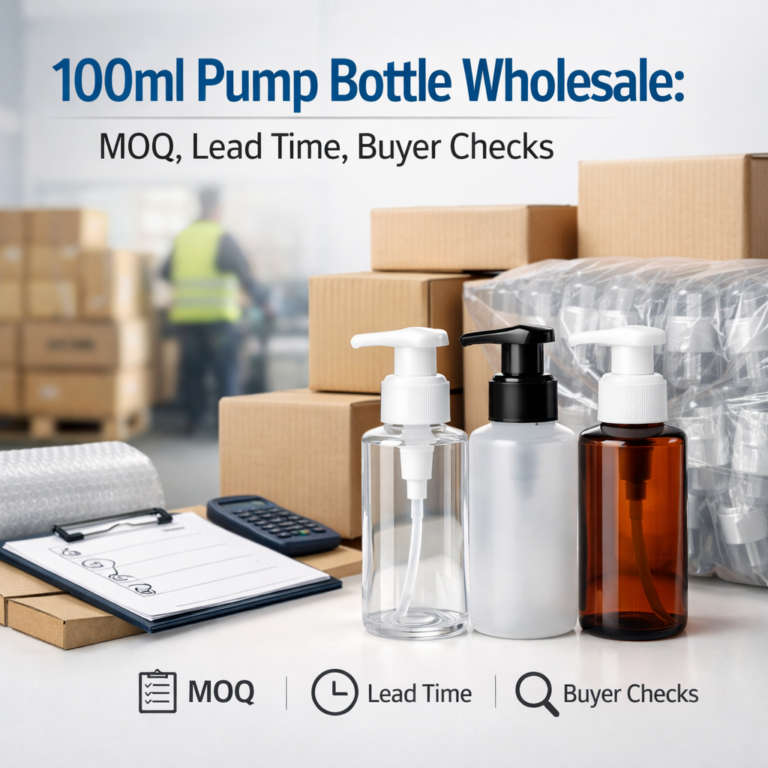
Pro Tip: When moving from advice to browsing, check the 100ml Pump Bottle Wholesale: MOQ, Lead Time, Buyer Checks guide if your product line expands into larger-format lotions or serums.
よくある質問
Which foam bottle options fit the target application and filling process?
The best fit depends on formulation viscosity. For water-thin liquids, a standard PET foam bottle with a 30mm or 42mm neck is ideal. If your filling process involves high-heat sterilization, HDPE or specialized heat-resistant PET must be used. Always ensure the pump output (e.g., 0.4cc) matches the intended dosage per stroke to prevent consumer dissatisfaction.
What MOQ, lead time, and customization constraints apply to foam bottle sourcing?
Standard stock foam bottles typically have an MOQ of 1,000 units with a 7-10 day lead time. Custom colors or silk-screening usually increase the MOQ to 5,000 or 10,000 units and extend lead times to 35-45 days. Customization is often constrained by the pump head design; while the bottle color can be changed easily, the pump mechanism colors are often limited to white, black, or natural unless ordering 20,000+ units.
When should I choose Amber Glass Dropper Bottles over other options?
You should browse and validate the Amber Glass Dropper Bottles | Portable & Refillable Travel Accessories when your shortlist requires a 5ml portable format for light-sensitive liquids. This is a critical next step if you have already confirmed that your formula reacts to UV light