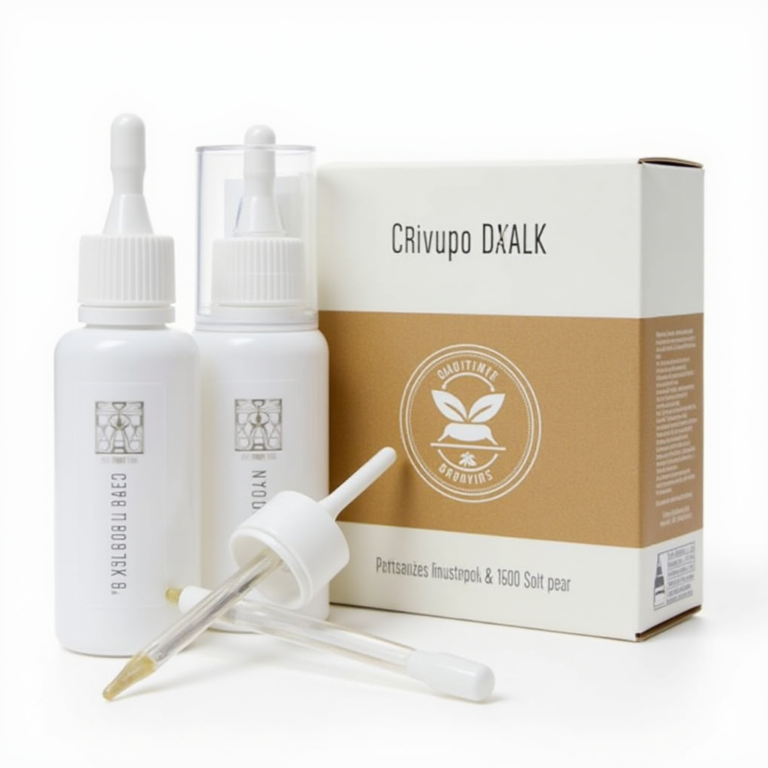
Wholesale Dropper Bottles: MOQ, Lead Time, Supplier
Procurement Snapshot: Sourcing wholesale dropper bottles requires balancing a standard MOQ of 5,000–20,000 units against a 35-to-50-day lead time for custom production, while ensuring 100% compliance with USP Type III glass standards to prevent chemical leaching. Data from global supply chain audits indicates that 18% of procurement delays in the cosmetic and pharmaceutical sectors stem from inaccurate neck-finish specifications and 12% from failure to account for holiday-related shipping volatility. For buyers validating a shortlist, the primary objective is navigating the trade-off between immediate stock availability (7–14 days lead time) and the cost-efficiencies of high-volume custom runs.
How buyers shortlist perfume glass bottles wholesale options
Shortlisting flacons de parfum en verre en gros suppliers is a data-driven exercise that prioritizes technical compatibility over unit price. Buyers must first determine if their application requires Type I (Borosilicate), Type II (Treated Soda-Lime), or Type III (Standard Soda-Lime) glass. Approximately 85% of the 20 listed items in our perfume glass bottles wholesale catalog utilize Type III glass, which offers the optimal balance of durability and cost for essential oils and fragrances.
Filling and Branding Compatibility
Before requesting a quotation, procurement teams should confirm the following technical parameters:
- Neck Finish (GPI/DIN): Ensure the 18/410 or 20/410 neck finish matches your filling line’s capping torque specifications.
- Light Sensitivity: Products containing UV-sensitive compounds require Amber or Cobalt Blue glass. Studies show that Amber glass blocks 99% of UV rays under 450nm, compared to only 10% for clear glass.
- Surface Treatment: If secondary branding (silk-screening or hot stamping) is required, the glass must be free of silicone-based mold release agents, which can cause ink adhesion failure in 30% of cases.
Shortlist Evaluation Framework
To move from a broad list to a finalist, buyers should apply the following scoring weights to their evaluation:
| Métrique | Weight | Critical Benchmark |
|---|---|---|
| MOQ Flexibility | 25% | Ability to scale from 1 case (750pcs) to 50,000+ units. |
| Lead Time Accuracy | 30% | Historical variance of <5 days from quoted ETA. |
| QC Defect Rate | 30% | AQL 1.0 for critical defects (leaks, cracks). |
| Compliance Documentation | 15% | Availability of MSDS, FDA, and REACH certifications. |
MOQ, lead time, and sample checkpoints for perfume glass bottles wholesale
The procurement cycle for wholesale dropper bottles is governed by three primary variables: stock availability, customization complexity, and logistics. For buyers in the “decision” stage, understanding these levers is critical to preventing stock-outs during product launches.
Stock vs. Custom Order Implications
Stock items, such as the 750pcs/case 10ml Flacons roulants en verre bleu pour huiles essentielles, are typically ready for dispatch within 72 hours. However, custom colors or proprietary mold shapes involve a multi-stage timeline:
- Sample Approval (10–14 days): Physical samples are sent for compatibility testing.
- Decoration Proofing (7–10 days): For silk-screening or frosting.
- Mass Production (25–35 days): The actual furnace run and annealing process.
- Shipping (14–40 days): Depending on Air vs. Sea freight.
Sample Checkpoints and Red Flags
When requesting samples for flacons de parfum en verre en gros, do not merely inspect for aesthetics. Implement a “Stress Test Protocol”:
- Weight Consistency: Measure 10 samples; a variance of >5% indicates poor mold quality.
- Couple de fermeture : Test the “strip torque” (the force at which the cap threads fail). For an 18mm neck, this should exceed 12 inch-pounds.
- Pipette Suction: For dropper bottles, the bulb should draw at least 75% of the pipette’s volume in a single squeeze.
“Sourcing without a sample proofing stage is the leading cause of 40-foot container rejections. Always validate the ‘fit-to-fill’ ratio before wire transfer.” – Procurement Director, Bobo Packaging
Specification and sourcing trade-offs for wholesale dropper bottles
Every decision in wholesale dropper bottles procurement involves a trade-off between cost, performance, and lead time. For instance, choosing a 1 dram (3.7ml) bottle over a 15ml (0.5oz) bottle significantly impacts the shipping-to-product cost ratio.
Comparison Matrix: Material and Closure Trade-offs
| Fonctionnalité | Option A: Glass (Type III) | Option B: Plastic (PET/PS) | Procurement Impact |
|---|---|---|---|
| Résistance chimique | High (Ideal for Oils/Perfumes) | Moderate (Risk of leaching) | Glass is preferred for premium branding. |
| Weight/Shipping | Heavy (Higher freight cost) | Light (Lower freight cost) | Glass adds 40% to shipping costs vs plastic. |
| Personnalisation | Frosting, Coating, Silk-screen | Color injection, Labeling | Glass offers higher perceived value. |
| MOQ | Typically 5,000+ | Typically 10,000+ | Glass has lower entry points for stock items. |
Sourcing Trade-offs: The “Hidden” Costs
Buyers often overlook the cost of secondary packaging. For example, a 10ml Blue Glass Essential Oil Roller Bottle packed at 750pcs/case requires specific palletization to prevent breakage during LTL (Less-than-Truckload) shipping. If a supplier quotes a price 15% below market, verify their packaging standards. Standard export cartons should be 5-layer corrugated with internal dividers. Removing dividers can reduce shipping volume by 10% but increases breakage rates by up to 25%.
If you are also evaluating dispensing options for larger containers, refer to our How To Choose Pump for Foam Bottle Supplier guide to understand the mechanics of spring-loaded vs. external-spring pumps.
Exemples de produits cartographiés et scénarios d'adéquation
To ground these procurement strategies, we have mapped three specific catalog examples to common buyer scenarios. These are not merely products but solutions to specific supply chain constraints.
1. High-Volume Essential Oil Launch
- Produit : 750pcs/case 10ml Flacons roulants en verre bleu pour huiles essentielles
- Pourquoi cela convient-il ? This is a “safety stock” favorite. With 750 units per case, it allows small-to-medium enterprises (SMEs) to bypass the 5,000-unit custom MOQ while still benefiting from wholesale pricing. The blue glass provides essential UV protection for volatile organic compounds.
- Context: Best for buyers needing a 10ml, Glass, Roller configuration for essential oils.
2. Premium Cosmetic Sampling
- Produit : Clear Glass Roll-On Bottles (30ml)
- Pourquoi cela convient-il ? The 30ml capacity is the industry standard for “travel size” or “deluxe samples.” Clear glass allows the product’s natural color to serve as the primary visual hook.
- Context: Ideal for brands using the Bouteille en mousse de 30ml pour cosmétiques guide logic to create a matching product line.
3. High-Concentrate Micro-Dosing
- Produit : Rolling Bottle, Amber Glass Essential Oil Roll-Ons with Black Caps (5ml)
- Pourquoi cela convient-il ? The 5ml capacity is designed for high-margin, concentrated formulas where dosage control is paramount. The Amber glass ensures a 24-month shelf life by preventing photo-oxidation.
- Context: Uses a PS cap for cost efficiency while maintaining a glass body for product integrity.
When selecting materials, it is also useful to consult the Bouteille en mousse Comment choisir le plastique guide to understand when a transition from glass to high-clarity PET might be appropriate for your brand’s sustainability goals.
Questions fréquemment posées
Which perfume glass bottles wholesale options fit the target application and filling process?
The best fit depends on formula viscosity and light sensitivity. For essential oils, Amber glass (available in 5ml and 10ml) is the standard due to its 99% UV blockage. For alcohol-based perfumes, Clear or Cobalt Blue glass is preferred for aesthetic clarity. Ensure the neck finish (e.g., 18/410) matches your filling machine’s chuck size to prevent cross-threading during high-speed production.
What MOQ, lead time, and customization constraints apply to perfume glass bottles wholesale sourcing?
Stock items typically have an MOQ of 1 case (e.g., 750pcs) and a lead time of 7–14 days. Custom orders (custom colors, silk-screening, or unique molds) generally require a minimum of 5,000 to 10,000 units with a lead time of 35–50 days. Customization is also constrained by the annealing process; complex shapes may increase the cooling time and unit cost by 15-20%.
When should I browse the “perfume glass bottles wholesale” tag page instead of individual products?
Vous devez parcourir le site flacons de parfum en verre en gros tag page when you are in the validation stage. This view allows you to compare 20+ different items—including varying capacities (1 dram, 15ml, 30ml) and closures (dropper vs. roller)—side-by-side to identify the best price-to-spec ratio before requesting a formal quote.
What are the common “red flags” in a wholesale dropper bottle quote?
A quote that is significantly lower than the market average often hides costs in packing density (lack of dividers leading to breakage) or glass grade (using soda-lime glass where borosilicate was specified). Always confirm if the “Lead Time” includes the 14-day ocean freight window or if it is “Ex-Works” (factory floor only).
Prochaine étape pour les acheteurs
For procurement professionals and brand owners ready to move from research to selection, the most efficient path is to