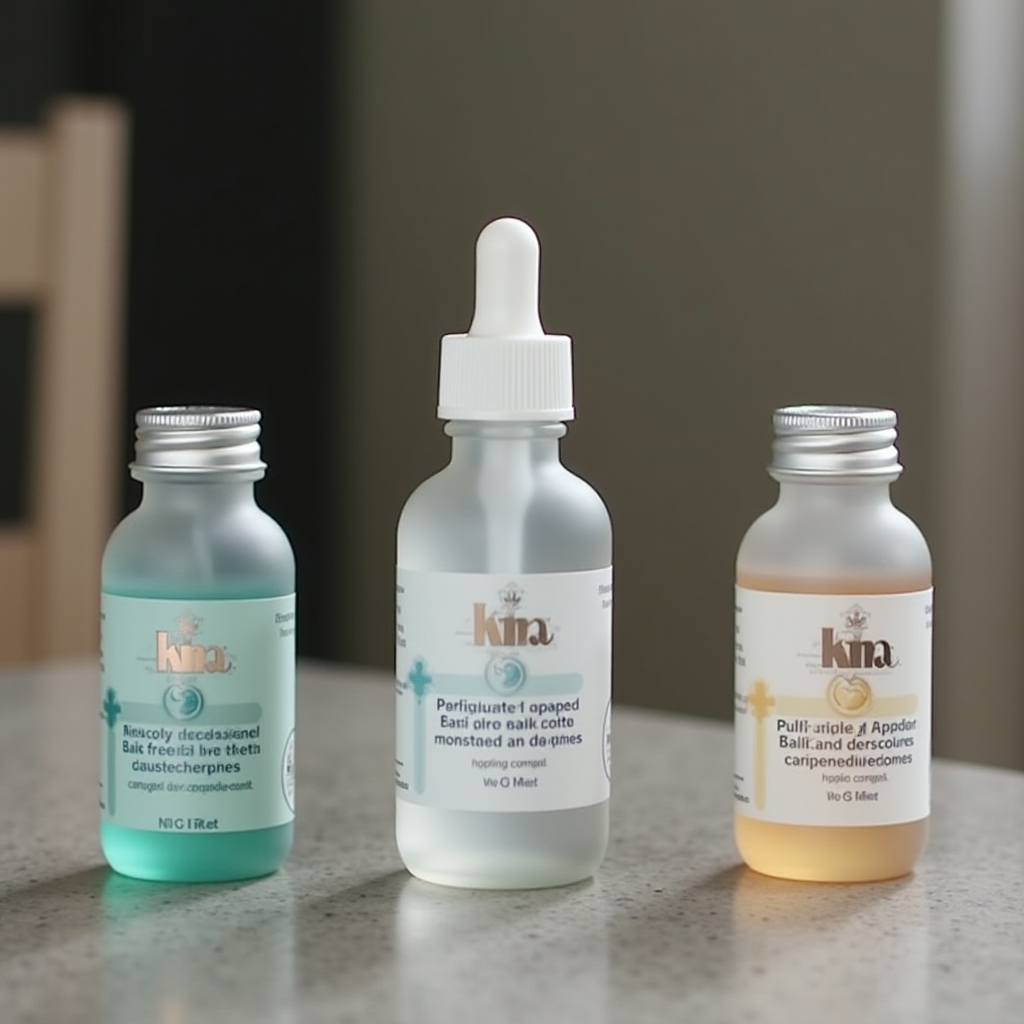
A cosmetic dropper bottle is a complete bottle and closure assembly, not only a glass container. The bottle, pipette, bulb, collar, seal, formula, fill size, and intended use all affect whether the finished package is suitable for a serum, facial oil, essential oil blend, sample, or another liquid product.
Use this guide to identify the parts, prepare a supplier request, and test a filled sample before placing a wholesale order. Product names and listed options can help you shortlist a format; they do not establish compatibility or performance with your formula.
What are the main parts of a dropper assembly?
| Part | What it does | What to confirm |
|---|---|---|
| Bottle | Holds the product and provides the neck finish for the closure. | Material, color, capacity, usable fill, dimensions, and product-contact surfaces. |
| Pipette or dip tube | Transfers liquid from the bottle into the dropper assembly. | Length, tip shape, internal diameter, material, and whether it reaches the intended fill level. |
| Bulb or squeeze component | Creates the action used to draw and release the liquid. | Material, recovery after repeated use, formula contact, and supplier specifications. |
| Collar, cap, or closure | Joins the assembly to the bottle neck and supports sealing. | Matched neck finish, liner or seal, thread engagement, tamper evidence, and decoration. |
| Tip or orifice | Influences how the liquid leaves the assembly. | Dispensing behavior with the actual formula and the intended application method. |
Ask for the complete assembly specification. A bottle listing alone cannot confirm that a particular pipette, bulb, collar, and seal will fit it.
How should you match the assembly to the formula?
Start by describing the formula and the way the customer will use it. Tell the supplier whether the product is water-based, oil-based, solvent-containing, fragranced, particulate, or otherwise sensitive to contact with packaging components. Your formulator and packaging supplier should decide which compatibility checks apply.
- Check whether the liquid can be drawn and released consistently.
- Inspect the bulb, pipette, seal, liner, and other wetted components after the planned storage period.
- Record changes in appearance, odor, texture, leakage, or dispensing behavior.
- Confirm whether the package protects the product under the intended storage and transport conditions.
Do not select an elastomer by a generic material table or assume that a bulb is suitable for every oil, solvent, fragrance, or active ingredient. Request the component material and supplier compatibility information, then test the final assembly with the actual formula.
What do capacity and fill options tell you?
Capacity labels are useful for creating a shortlist, but the selected fill should be confirmed with the supplier and filler. A nominal bottle size does not by itself establish the practical net fill, headspace, label area, or amount that the pipette can draw.
For example, the published BOBOPKG options below show different size ranges. They should be sampled with the intended formula and closure before artwork approval or bulk purchasing.
| Published option | Listed choices | Questions for the sample |
|---|---|---|
| Golden glass dropper bottle | 15ml, 30ml, and 50ml; transparent and brown material options listed. | Confirm the included closure, pipette, usable fill, product-contact materials, and sample assembly. |
| Dark green glass dropper bottle | 15ml, 20ml, 30ml, 40ml, and 50ml options listed. | Confirm the exact color, closure, fill, label area, and whether the selected assembly suits the formula. |
| PE squeezable dropper bottle | 5ml, 10ml, 15ml, 20ml, 30ml, and 50ml; white lid listed. | Confirm the squeeze behavior, wetted material, cap seal, and use instructions for the finished liquid. |
What should you inspect in a filled sample?
- Fill the selected assembly with the intended formula or a representative production batch.
- Confirm the closure, pipette, bulb, collar, and liner are the components quoted for production.
- Check priming, draw, release, drop or stream behavior, and repeatability.
- Inspect the bottle and closure after storage in the expected orientation and temperature range.
- Check leakage after normal handling and the planned transport method.
- Review the label panel, decoration, color, and visible fill level against the final artwork.
- Record the formula, components, conditions, observations, and approval decision.
Use the results to approve a complete component specification. A product title such as “refillable,” “travel,” or “leak-proof” should not be treated as a substitute for a test of the filled package.
Which closure details belong in a quotation?
Send the supplier the target fill, formula type, preferred bottle material and color, closure style, pipette or bulb requirements, decoration, sample quantity, order quantity, destination, and shipping conditions.
Ask for the minimum order quantity, sample availability, component drawing or specification, product-contact materials, customization options, lead time, and price for the exact assembly. Ask specifically whether the quotation includes the bottle, pipette, bulb, collar, liner, overcap, insert, and packaging.
For a broader comparison, review the categoría de frascos cuentagotas y essential oil packaging range. For a skincare serum or facial oil project, also compare the skincare packaging collection.
Contact BOBOPKG with the formula type, target fill, and shortlisted assembly to request samples and a quotation.
Preguntas frecuentes
Is a glass bottle enough to specify a cosmetic dropper?
No. The closure, bulb, pipette, seal, and formula-contact components also need to be specified and tested.
Can I assume a 30ml bottle has a standard neck finish?
No. Confirm the exact neck finish and matched closure for the selected product. Do not combine components based only on nominal capacity.
Does a dark bottle prove light protection?
No. Color alone does not establish a measured light barrier. Request relevant supplier information and evaluate the finished product in its marketed assembly when light sensitivity matters.
Does “refillable” prove that a package can be reused safely?
No. Confirm the intended refill process, cleaning controls, closure wear, and product safety requirements before making reuse claims.
 English
 Français
 Deutsch
 Español