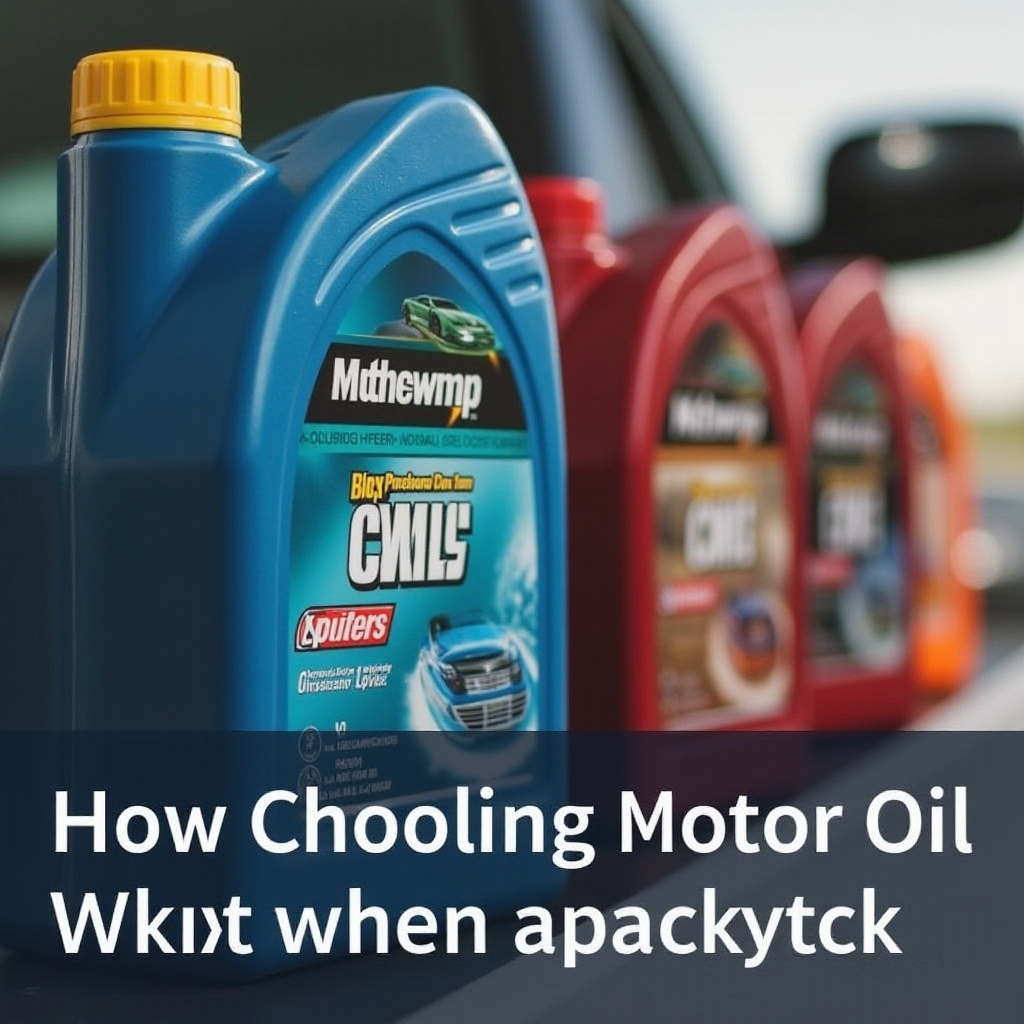
How to Choose Oil: The Definitive Mechanic’s Guide to Picking the Right Engine Protection
Your engine is an orchestra of metal parts moving at thousands of RPMs. As you cruise down the highway, pistons fire, crankshafts rotate, and valves snap open and shut with micro-second precision. The only thing preventing a catastrophic “meltdown” is a thin film of oil—often thinner than a human hair. Choosing the wrong oil isn’t just a minor mistake; it’s a slow death sentence for your vehicle that leads to sludge buildup, decreased fuel economy, and eventual mechanical failure.
El veredicto (respuesta rápida): To choose the right oil, you must match the viscosity grade (e.g., 5W-30) and the performance specification (e.g., API SP or ILSAC GF-6) found in your vehicle’s owner’s manual. For modern engines, especially those with turbochargers or direct injection, a Totalmente sintético oil is almost always the superior choice for longevity and extreme temperature protection.
Section 1: Decoding the Label (Viscosity and SAE Grades)
When you look at a bottle of motor oil, the most prominent feature is the alphanumeric code, such as 0W-20 or 10W-40. These are the SAE (Society of Automotive Engineers) grades, and they represent the oil’s viscosidad—essentially, how thick or thin the fluid is and how it reacts to temperature changes.
The Numbers Explained
- The “W” (Winter): The first number followed by a “W” indicates the oil’s flow characteristics at cold temperatures (0°F). A lower number (like 0W or 5W) means the oil stays fluid in freezing weather, allowing it to reach the upper valvetrain quickly during a cold start.
- The Second Number: This represents the oil’s resistance to flow at the engine’s normal operating temperature (typically 212°F or 100°C). A higher second number (like 40) indicates a thicker oil that maintains more “body” under high heat.
The “Goldilocks” Principle of Viscosity
Modern engines are built with incredibly tight tolerances. If you choose an oil that is too thick (high viscosity), it may not be able to circulate through the tiny oil passages in a modern engine, leading to oil starvation. Conversely, if the oil is too thin (low viscosity), it may fail to provide a sufficient protective barrier between moving parts, leading to metal-on-metal contact.
Engineers also focus on shear stability. This is the oil’s ability to resist the mechanical “tearing” that happens inside the engine. High-quality multi-grade oils use viscosity index improvers to ensure the oil behaves like a thin oil when cold and a thicker oil when hot, providing the best of both worlds.
Section 2: Base Oil Types: Conventional vs. Synthetic vs. Blends
Not all oils are born equal. The “base stock” makes up about 70-80% of the fluid in the bottle, and its origin determines how the oil performs over thousands of miles.
Conventional (Mineral) Oil
Derived directly from refined crude oil, conventional oil is the traditional choice. While it provides adequate lubrication, its molecular structure is inconsistent. It contains impurities like sulfur and wax that can lead to sludge formation over time. It is best suited for older engines with simple designs or for “break-in” periods on newly rebuilt motors.
Aceite totalmente sintético
Full synthetic oil is chemically engineered in a laboratory. Because the molecules are uniform in size and shape, they create less internal friction. The benefits are significant:
- Superior Oxidation Resistance: It doesn’t break down as quickly when exposed to high heat.
- Better Low-Temp Flow: It stays liquid at temperatures where conventional oil turns into “molasses.”
- Longer Drain Intervals: You can often go 7,500 to 15,000 miles between changes, depending on the manufacturer.
Mezcla sintética
Often marketed as “Premium Protection,” blends are a mixture of synthetic and conventional base oils. They offer a middle ground in terms of performance and price, making them a popular choice for light-duty trucks and SUVs that experience occasional towing or hauling.
High-Mileage Oil
If your odometer has crossed the 75,000-mile mark, consider high-mileage oil. These formulations include seal conditioners—additives that soak into old, brittle gaskets and seals to make them swell slightly, effectively “plugging” small leaks and reducing oil consumption.
Section 3: The Comparison: Synthetic vs. Conventional Data Analysis
To understand why the industry is moving almost exclusively toward synthetics, we need to look at the hard data. While the initial cost of synthetic oil is higher, the long-term savings in engine health and change frequency are undeniable.
| Característica | Petróleo convencional | Aceite totalmente sintético |
|---|---|---|
| Molecular Uniformity | Irregular (Higher Friction) | Uniform (Lower Friction) |
| High-Temp Stability | Prone to Sludge/Evaporation | Highly Resistant |
| Low-Temp Flow | Sluggish (Increases Wear) | Instant Flow at Startup |
| Oil Change Interval | 3,000–5,000 Miles | 7,500–15,000 Miles |
| Cost per Quart | $4–$6 | $9–$12 |
| Volatility (Burn-off) | Higher | Muy bajo |
Section 4: Decoding the “Donut” (API and ACEA Standards)
Beyond viscosity, you must look for the industry certifications. These are usually found in a circular “Donut” symbol on the back of the bottle.
The API Service Symbol
The American Petroleum Institute (API) sets the standards for oil performance in the United States. The current highest standard is API SP. This standard was introduced to address “Low-Speed Pre-Ignition” (LSPI), a phenomenon in modern turbocharged, direct-injection engines where the fuel-air mixture ignites prematurely, potentially shattering pistons. If you have a car made after 2020, API SP is likely a requirement.
The “Starburst” and ILSAC
If you see the API Starburst on the front of the bottle, it means the oil meets the ILSAC (International Lubricant Specification Advisory Committee) standards. This certification focuses heavily on fuel economy and emissions system protection.
European Specs (ACEA)
European manufacturers like BMW, Mercedes-Benz, and Volkswagen have much stricter requirements than American or Japanese brands. They use ACEA ratings (e.g., A3/B4 or C3). European engines often have longer oil change intervals and smaller oil capacities, requiring the oil to work much harder. Always check for the specific manufacturer “Approval” code (like VW 502.00 or MB 229.5) if you drive a European import.
Section 5: Additive Packages – What’s Inside the Bottle?
Base oil provides the lubrication, but the “additive package” (the remaining 20-25% of the bottle) provides the protection. Just as you might consult La guía completa al por mayor to understand the logistics of sourcing quality materials in bulk, oil manufacturers carefully source these chemicals to balance engine life.
- Detergents & Dispersants: These chemicals scrub the internal surfaces of your engine. They keep carbon and soot suspended in the oil so they can be trapped by the filter rather than settling into “sludge.”
- Anti-Wear Agents (ZDDP): Zinc and phosphorus (ZDDP) form a sacrificial layer on metal parts. When the oil film is momentarily squeezed out, the ZDDP prevents the metal parts from welding together.
- Modificadores de la fricción: These reduce the drag between moving parts, which directly translates to better MPG.
- TBN (Total Base Number): Combustion creates acidic byproducts. TBN is a measure of the oil’s “alkaline reserve”—its ability to neutralize those acids before they eat away at your engine bearings.
In the same way that different materials are chosen for specific functions—much like how you would evaluate the 7 Best Foam Types for Comfort and Durability for structural integrity—oil additives are selected based on the specific stress the engine will endure.
Value Add: The “5-Step Oil Selection Checklist”
Don’t stand in the auto parts aisle feeling overwhelmed. Follow this systematic approach:
- Consult the Manual: This is the “Bible” for your car. Check the index under “Engine Oil” for the required viscosity and specification.
- Verify the Climate: If you live in a region with extreme winters (below -20°F), you may want to move from a 5W to a 0W (if allowed by the manufacturer) to ensure faster lubrication on cold mornings.
- Check the Odometer: For vehicles with over 75,000 miles, prioritize a “High Mileage” synthetic to protect aging seals.
- Look for the Seal: Ensure the bottle carries the API “Starburst” or the SP rating in the donut.
- Match the Filter: A premium synthetic oil can last 10,000 miles, but a cheap $3 cellulose filter might collapse after 3,000. Always pair high-end oil with a high-efficiency synthetic media filter.
FAQ: Real Questions from Real Drivers
Q: Can I switch from conventional to synthetic oil on an old car?
A

 English (United States)
  Spanish
  French
  German
  English (UK)
  Japanese
  Korean
  Russian
  Arabic