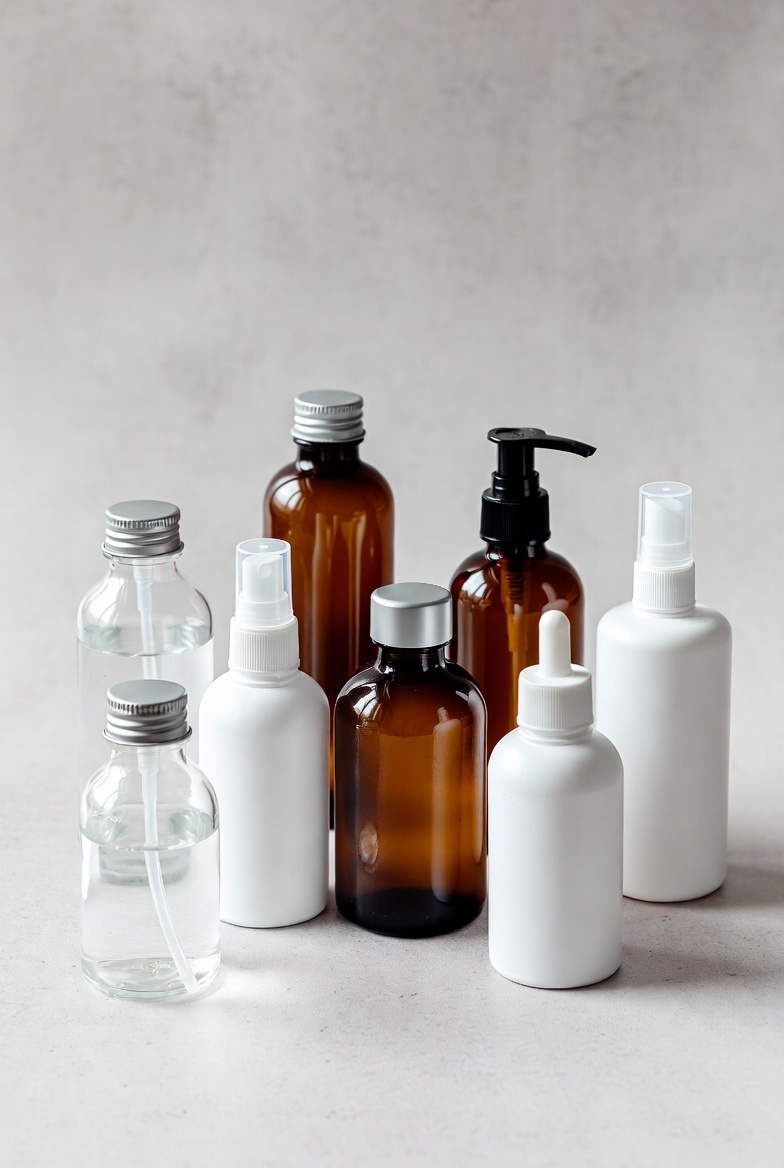
# Bottle Compatibility And Fit: MOQ and Lead Time Risks
Achieving perfect **bottle compatibility and fit** is the single most critical factor in preventing product leakage, label misalignment, and assembly-line failure. In the packaging industry, a mismatch as small as 0.2mm in thread depth can result in a failure rate exceeding 15% during automated capping, leading to costly downtime and rejected inventory. To ensure success, procurement teams must treat the vessel and its closure as a single engineered system rather than independent parts.
### The High Cost of Mismatched Bottle Components
When sourcing packaging, the financial impact of a mismatch is rarely limited to the cost of the faulty component. Industry data indicates that production downtime caused by incompatible neck finishes—such as attempting to force an 18/415 closure onto a non-standard 20/400 neck—can increase total project overhead by 22% to 35% due to labor-intensive manual sorting and product waste.
Procurement professionals must account for the following “hidden” costs of poor compatibility:
* **Production Line Stoppage:** Automated capping machines rely on precise torque-to-seal ratios. Mismatched threads lead to “cross-threading,” which triggers emergency line stops.
* **Inventory Obsolescence:** If your 0.5oz dropper bottles arrive with a neck finish that does not accept your chosen glass or plastic pipette, the entire batch becomes dead stock.
* **Downstream Risks:** Inconsistent seals lead to oxidation or evaporation of the liquid content, potentially triggering chemical reactions that degrade the product’s shelf life.
**Prerequisites for Procurement Success:**
Before finalizing any purchase order, ensure you have:
1. **Technical Drawings:** Request the specific neck finish (SPI standard) from the supplier.
2. **Sample Sets:** Always test the closure on the actual bottle batch, not just a generic sample.
3. **Torque Specifications:** Define the required inch-pounds of torque for your specific filling equipment.
—
### Critical Compatibility Variables: Beyond the Neck Finish
Many buyers assume that if the neck diameter matches, the fit is secure. However, technical engineering requires a deeper analysis. A failure in **bottle compatibility and fit** often occurs because of overlooked variables in the manufacturing process of the bottle versus the closure.
| Variable | Impact on Seal Integrity | Failure Risk (If ignored) |
| :— | :— | :— |
| **Thread Pitch** | Determines how deep the cap seats | Cross-threading / Leaks |
| **Liner Material** | Must be chemically inert to the fluid | Chemical degradation / Seal failure |
| **Torque Tolerance** | Force required to engage the seal | Stress cracking of the neck |
| **Neck Ovality** | Deviation from a perfect circle | Incomplete vacuum seal |
#### Technical Specs vs. Application Scenarios
* **The 5ml PP Dropper Case:** When sourcing the [Dropper Empty Liquid Bottles Refillable Squeeze Bottle](https://bobopkg.com/product/dropper-empty-liquid-bottles-refillable-squeeze-bottle-small-dropper-bottle-can-hold-paint-oily-liquid-glue-and-other-liquids/), the PP (Polypropylene) material offers high chemical resistance. However, because it is a squeeze bottle, the interaction between the dropper insert and the bottle orifice must be tight enough to prevent “pop-off” during high-pressure dispensing.
* **The foam bottle Scenario:** For items like the [30ml 60ml 100ML White pump white lid Plastic Foam Bottle](https://bobopkg.com/product/30ml-60ml-100ml-white-pump-white-lid-plastic-foam-bottle-empty-shampoo-container/), the pump mechanism requires a specific headspace. If the bottle is overfilled or the pump straw is too long, the internal pressure will force the foam out prematurely, causing mess and customer dissatisfaction.
—
### Mitigating MOQ and Lead Time Risks During Sourcing
Sourcing bottles and closures from different suppliers is the most common cause of supply chain bottlenecks. When you decouple the container from the closure, you lose the “system warranty” provided by a single-source supplier.
**Strategies for Risk Mitigation:**
1. **Bundled MOQ Requirements:** Negotiate Minimum Order Quantities (MOQs) based on “sets.” If a supplier requires a 5,000-unit MOQ for the bottle and 5,000 for the cap, verify they can be processed as a single shipping unit to ensure they arrive at the same time.
2. **Synchronized Lead Times:** Always confirm that the lead time for the closure does not exceed the lead time for the bottle. An 8-week lead time for a custom pump can idle your production line even if your bottles arrive on time.
3. **The “Single Source” Advantage:** Whenever possible, source from a catalog that provides pre-validated combinations. For example, exploring [dropper bottle 0.5oz(15ml) options](https://bobopkg.com/product-t/dropper-bottle-0-5oz15ml/) through a single vendor ensures that the thread count and neck finish are pre-verified.
—
### The Essential Sample Validation Protocol
Before moving to mass production, implement a three-tier validation protocol. This prevents the “buy first, test later” mistake that plagues 40% of small-batch procurement.
1. **Vacuum Testing:** Place the filled, capped bottle in a vacuum chamber. If the seal fails, air bubbles will appear at the neck interface.
2. **Drop Testing:** Subject the filled assembly to a 1.5-meter drop onto a concrete surface. A failure here indicates the bottle neck or closure thread is too brittle for your shipping logistics.
3. **Torque Retesting:** Use a torque meter to ensure that after 48 hours of sitting, the closure has not “backed off” due to plastic creep or thread incompatibility.
—
### Frequently Asked Questions About Bottle Fit
**Q: Can I use a standard dropper on a custom bottle?**
A: Not necessarily. Even if the nominal neck diameter (e.g., 18mm) matches, the thread profile (the shape and angle of the spiral) varies between manufacturers. Always request a sample for a fit-check before committing to a bulk order.
**Q: What happens if my torque settings are too high?**
A: Excessive torque leads to “stress cracking” on the bottle neck, especially with PET materials. This creates micro-fissures that may not leak immediately but will fail during shipping or storage.
**Q: How do I verify neck finish compatibility without a physical sample?**
A: Request a technical drawing (CAD file) from the supplier and overlay it with your closure specifications. If you are struggling to find a match, you should browse our [dropper bottle 0.5oz(15ml)](https://bobopkg.com/product-t/dropper-bottle-0-5oz15ml/) tag page, which lists verified sets designed to work together right out of the box.
—
### Streamline Your Procurement with Verified Sets
Navigating the complexities of packaging shouldn’t be a gamble. By choosing pre-validated components, you eliminate the risks of mismatched threads, assembly failure, and production delays.
* **View Verified Sets:** Browse our [dropper bottle 0.5oz(15ml)](https://bobopkg.com/product-t/dropper-bottle-0-5oz15ml/) category to see combinations where the bottle and closure have been tested for perfect fit. This page is the fastest way to filter by material, closure type, and capacity, saving you weeks of sampling time.
* **Explore Foam Solutions:** If your application requires dispensing foam rather than drops, visit our [foam bottle](https://bobopkg.com/product-c/foam-bottle/) category to find specialized pump-and-bottle systems.
* **Request a Compatibility Audit:** If you have an existing supply chain and are experiencing high defect rates, contact our procurement specialists. We can audit your current specifications and help you transition to a more reliable, single-source procurement model.
**Success Checklist:**
– [ ] Confirmed neck finish (e.g., 18/415) matches for both bottle and closure.
– [ ] Verified chemical compatibility between liquid and liner.
– [ ] Performed drop testing on initial samples.
– [ ] Synchronized lead times to avoid assembly gaps.
– [ ] [Browsed the dropper bottle 0.5oz(15ml) collection](https://bobopkg.com/product-t/dropper-bottle-0-5oz15ml/) to finalize your shortlist.